Lady Eve Balfour, a profile by Sophia Kane
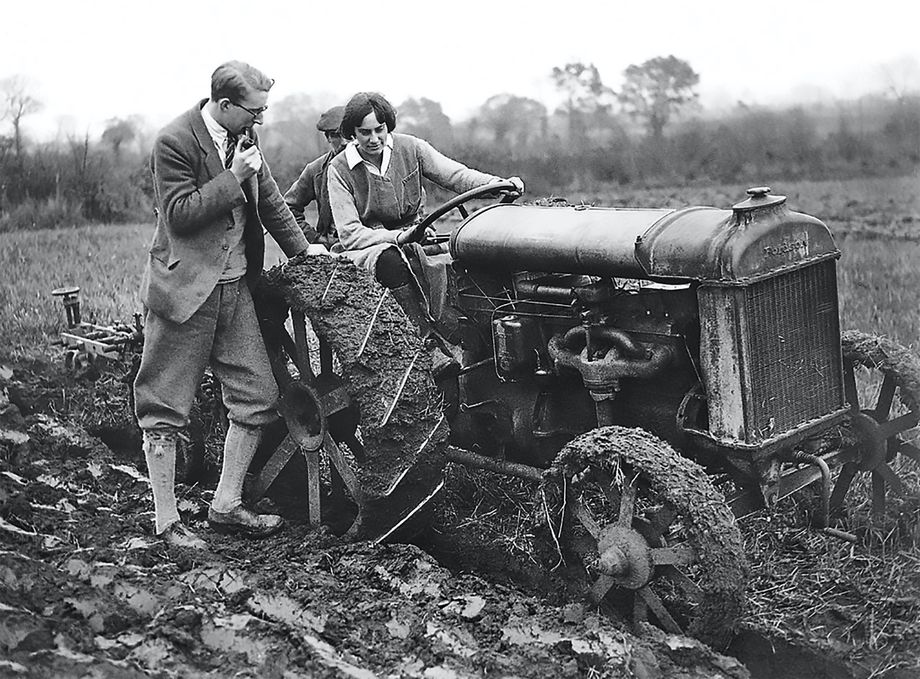
Lady Eve Balfour is one of the most important and influential environmentalists and pioneers of organic agriculture who you have never heard of. Balfours efforts have been nationally recognized, being awarded the title of an Officer of the Most Excellent Order of the British Empire.
She was one of the first women in the United Kingdom to attend university, forging documents to make herself appear older to be allowed to study at Reading University at 17, receiving a degree in agriculture. Balfour bought a farm with her sister in Suffolk, England, named New Bells Farm, Haughley, using this land to conduct what became known as Haughley experiments. She used this farm to study and compare the effects of organic agricultural techniques and more modern chemical and industrial techniques, comparing the two to determine if either was more beneficial to the soil and crop quality. The results from these experiments were published by Balfour in The Living Soil, founding The Soil Association with a group of friends in 1946.
The Soil Association is a prominent organization advocating for organic food and organic agricultural techniques. They have received recognition, support and endorsement from the United Kingdom Government, continuing to work towards researching organic agriculture and establishing new standards for soil and crop quality, following in Balfours belief that healthy people come from healthy food and healthy soil. Lady Eve Balfour deserves to be known for her efforts , with this podcast attempting to share a small look at her incredibly interesting, complex and accomplished life.
(A) Born in 1898, Lady Eve Balfour is the earliest figure profiled in this project. Known as the “mother of organic agriculture,” Balfour laid the foundation for the organic food movement. Her guiding principle – “To have healthy people, you need healthy food, which comes from healthy soil” – led the idea that health begins with healthy soil. Living through the industrialization of agriculture yet refusing to embrace its “improvements,” Balfour’s perspective allowed her and the Soil Association to establish a foundational framework for modern agricultural scholars.
(B) I appreciated how you highlighted the Soil Association’s founding principle, that its members did not “trust common farming practices.” Whether intentional or not, this shows how industrial agriculture was adopted so rapidly that its consequences were overlooked in the name of convenience. At the same time, and even true today, scholars began acting on their concerns. It’s interesting to see independent thinkers challenge a prevailing power structure.
(C) Any form of included media would have been nice, but it’s difficult to offer criticism in that regard given that Balfour predated audio recordings. That said, maybe there could have been more direct quotations and references to her own writings? Including the writings of your figure/organization would ground your narrative in their perspective
A) I thought that it was interesting to learn how her interests in organic farming came about. She was a very important pioneer of org with farming focusing on soil health and founded the Soil Foundation.
B) I liked the fruit and the information that you included about this historical figure. I also liked that you gave a brief nod to J.I. Rodale and the Rodale Institute.
C) I would have liked to hear recordings either those said from the figure herself or someone else who was close to her.
A) I learned that Lady Eve Balfour was a trailblazer in organic agriculture who conducted groundbreaking experiments comparing organic and industrial farming methods, ultimately founding The Soil Association to promote healthy soil and food.
B) I liked how you brought the idea the relationship between organic farming and its relationship to human health, and not just for the environmental factor. I also thought it was interesting how you brought the historical aspect
C) I would have liked to have some recordings from Belfort or maybe someone speaking about her.
Lady Eve Balfour is a very interesting figure, and it is disheartening that not many people know of her impact though it was so widespread. The Haughley experiments are particularly interesting to me. The comparison of organic and commercial farming practices first run by Balfour is still being done today.
Overall, the presentation of your information was effective and captivating. I liked the connection to Rodale, another subject of a podcast.
I thought this podcast was great, but I’d love a little more connection to what we learned in class. I think there were a lot of opportunities for reference to historical events we learned about.
First off, the podcast started with excellent energy and it already felt exciting to listen to, which is a huge plus for a podcast. I have never heard of her either before this, so this was very interesting to hear! “The mother of organic ag” is a pretty impressive tag to have, so clearly she must’ve been fairly important to the whole organic farming movement. She seemed to be a frontrunner of not using pesticides and chemicals, hosting various amounts of experiments to help prove that these were harmful. An improvement could perhaps be to include an audio of her speaking or an interview clip of her. Sometimes it is nice to hear a voice change, or put a voice to a name!