Coalition of Immokalee Workers: a profile by Sophia Kane
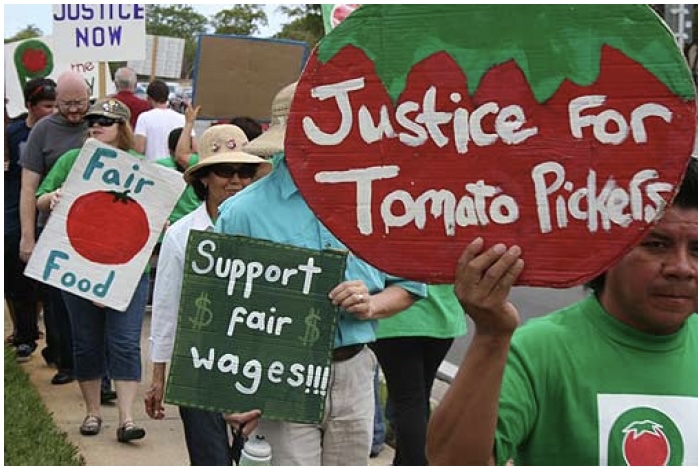
This podcast addresses the Coalition of Immokalee Workers or the CIW. This is an organization of farm workers started in 1993 in Immokalee, Florida that was looking to achieve better rights, conditions and wages for migrant workers on tomato farms in Immokalee, Florida. While they have worked for and achieved a multitude of successes for human rights for these workers, the CIW is best known for their Fair Food Campaign and Fair Food Program, founded in 2005 and 2011 respectively. These organizations protest food companies to eventually work with them to ensure basic human rights, humane wages and working conditions for farm workers on all participating farms, making sure that migrant workers are not being discriminated against or being taken advantage of.
Many prominent companies have joined the Fair Food Program, including McDonalds, Taco Bell, Burger King, Chipotle, Walmart and Whole Foods. By joining, these companies are making a committed effort to bettering not only the workers’ lives, but our national food system, allowing more people to access sustainably and ethically produced food. Beyond the Fair Food Campaign and Program, the CIW has greatly reduced sexual harassment and sexual assault for farm workers through education programs and field supervisors, again increasing quality of life for these workers.
The CIW is one of the most influential and successful human rights organizations in the United States, helping so many people achieve basic rights, better quality of life and healthy food options and overall represents a major shift within the US towards an improving food system.
The opening perspective of your podcast is excellent and aligns with the conversations we have had in this class. When we first begin to understand the food system, labor is rarely our initial focus. Instead, we tend to see our foodshed through a commercial and consumer-oriented lens, thinking backwards from the point of consumption. Part of developing a deeper awareness of the food system means recognizing that we, as consumers, sit at the end of a much longer and often exploitative cycle. Learning about figures such as the Immokalee Workers (and César Chávez!!!) is not just about understanding how food reaches us, it’s about reevaluating our choices and acknowledging the labor that sustains the system.
What I found most compelling in your podcast was the collaboration between the Coalition of Immokalee Workers, the FBI, and the U.S. Department of Justice to uncover cases of “human trafficking, discrimination, and modern-day slavery” on Florida farms. Unlike Chávez’s focus on organizing for fair working conditions, this movement focused on a larger-scale issue: the structural exploitation within agriculture and the need to hold corporations and entire industries accountable. As you state: “Food is never just food, but that it has much larger implications coming from the treatment of those who provide it. [Their] program is not just about improving farmworker rights, but is about achieving sustainability for our global food systems.” Leading into this was understanding that, while corporations are providers, consumers are the largest buyers in the world. While the CIW fights for a sustainable platform, we must invest in their feats. Power must go back to the consumers.
I enjoyed how you introduced small personal anecdotes, like a conversation with a friend about the Coalition of Immokalee Workers, interwoven with your explanation of the profile. It both gave the podcast a more conversational touch as well as made it more approachable and digestible.
I found the audio clips included to be relevant as well as interesting. They helped connect the listener to the people who had these experiences by hearing their voices as well as what they have to say.
I’m curious to learn more about the boycott about Taco Bell, specifically how it was able to gain enough traction as to make a dent in their profits. What strategies were used, and what strategies weren’t? Additionally, the program for fast food companies and farm worker rights seems to be extremely successful. Walmart joining the fair food program clearly was majorly impactful in paying workers due to the massive number of people they serve.
I have wondered about where fast food companies source their vegetables, and I appreciated this opportunity to learn more about it.
While we did not discuss a lot about farm workers and the production of food in class, I found this podcast eye-opening. In my Environmental Justice class, I focused on researching Food Justice on the topic of Farmworkers. While doing my research, I learned about the food justice movement, of course, and I came across farm worker justice activists such as Dolores Huerta and Cesar Chavez. As consumers, we can not ignore talking about the producers of the food that we eat, so I found the CIW very interesting. They not only strived to advocate for farm worker rights but also to make sure that large corporations were held accountable as well. Consumers are at the end of the food system, but it is the farmers who bear the brunt of working in the fields, etc. Also, as producers, we make the ultimate decision on what to eat and where to get our food from. It is important to think about these choices as it helps everyone benefit in the long run.
This podcast really opened my eyes to the labor behind the food system—something I don’t think about enough as a consumer. I appreciated how it explained the origins of the Coalition of Immokalee Workers and how their work goes far beyond just advocating for better wages. The way the podcast highlighted their partnerships with big-name companies and the success of the Fair Food Program really showed the impact of organized labor and consumer pressure. What stood out most to me was learning about the CIW’s role in reducing sexual harassment in the fields and even collaborating with the DOJ and FBI to expose human trafficking. It made me realize how deeply tied food is to social justice, and how much power both corporations and consumers have to shift the system.