
8 Countries, 47 Trains, 1 Eurail Pass

When I saw the Black Friday deal for the Eurail pass last November, I didn’t entirely know what I was getting myself into. After not leaving the United States for the first twenty years of my life, all I knew was that I wanted to see as much of the world as I could in the few months that I was going to be abroad. So, I decided to purchase the three-month unlimited youth Eurail pass for €570, 25% off of the original price. Now, three months, 47 trains, 7,212 kilometers, and over 2 days, 6 hours, and 23 minutes spent on trains later, I can confidently say that what seemed like a freakishly expensive purchase at the time, turned out to be one of the best decisions I have ever made.
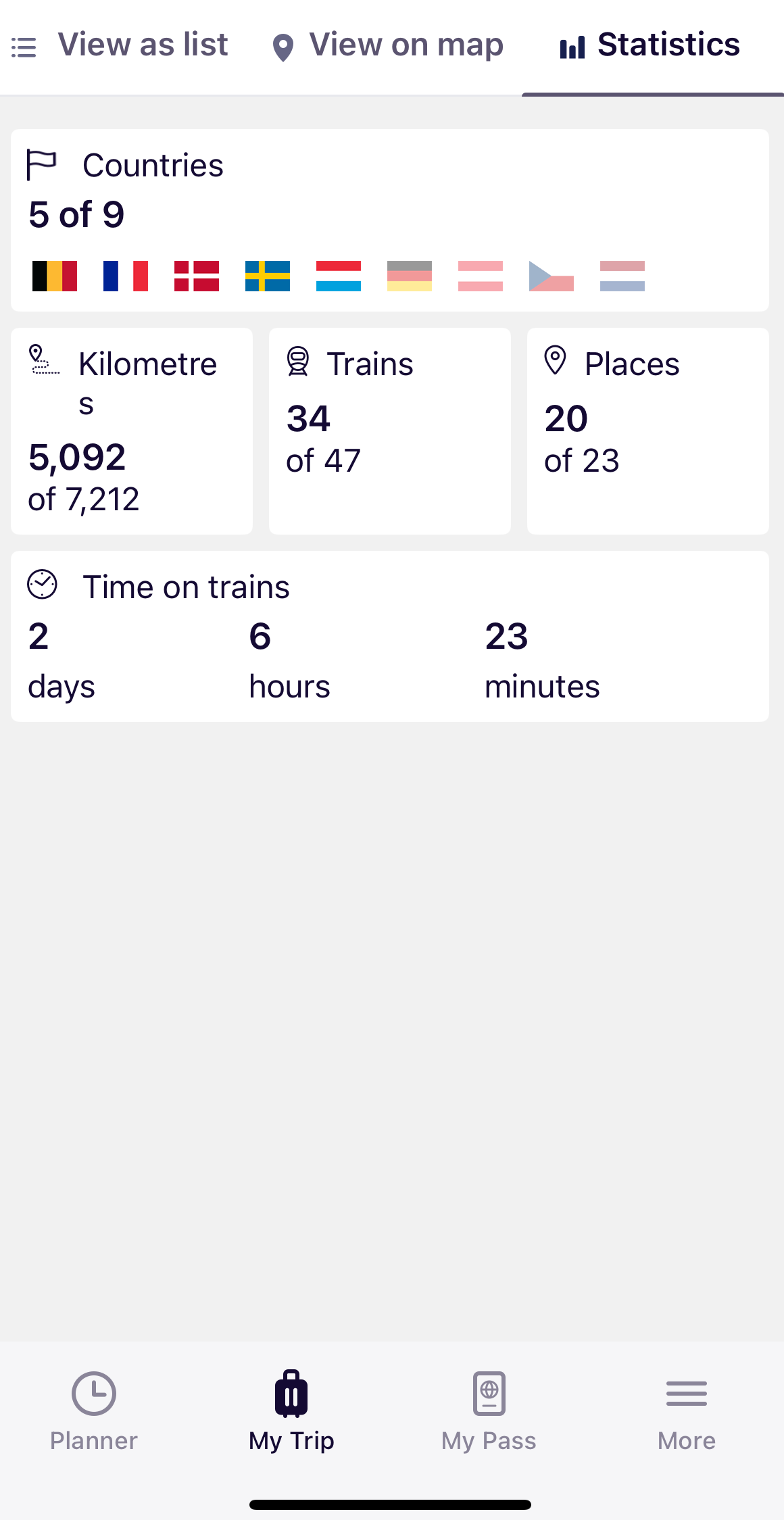
With Bonn as my base, I used my weekends traveling all across Europe by train, visiting Belgium, France, Denmark, Sweden, Luxembourg, Austria, Czechia, and The Netherlands. Although some of these trips were planned weeks in advance, most of them were just spontaneous decisions a day or two prior. And that is exactly where having the pass really paid off.
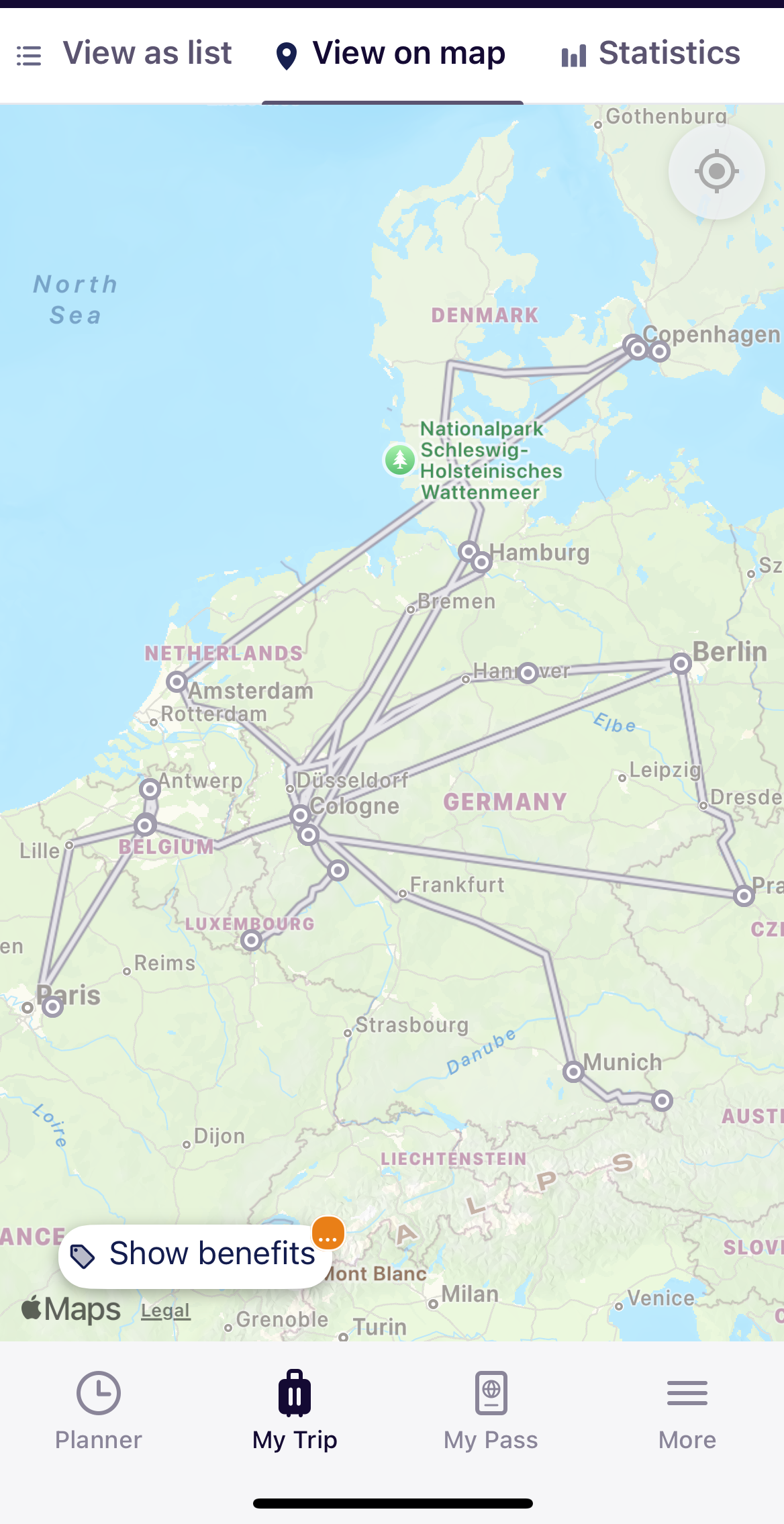
Train tickets in Europe can be extremely affordable… if you book them months in advance. However, being here for such a short amount of time, and as students with classes and homework and constant schedule changes, we lived on the fly. Because of this, if we were to purchase tickets per trip, we could have easily spent upwards of €200 for a round-trip ticket, depending on things like the route and timing of the trains.
Let’s break down the costs:
- Average round-trip fare (last minute): ~€200
- I took 47 trains, that’s over 20 round trips
- Even at only 10 round trips, that’s ~€2,000 worth of travel
- The normal price of the pass is ~€780, €570 during Black Friday
Even if I had bought all my tickets super far in advance, they still would have cost me €60 round trip, that’s still ~€1,200 for 20 trips, more than double what I paid for the pass.
So was it worth it? Aside from the obvious cost savings, the other factors that made the Eurail pass so worth it were, spontaneity, flexibility, comfort, and ease. On a whim, it was so easy to get up in the morning and decide to make a trip out to Luxembourg. I could pretty much take any train that I wanted, not having to worry about getting on a specific train at a set time. From there I could just load the journey onto the app, have my QR code ready to scan, and enjoy the gorgeous scenery out the window.
If you’re staying in Europe for a while and thinking about hopping on a train every now and then, I could not recommend the Eurail pass enough, especially if you are under 27 and qualify for their youth rate.
So yeah, €570, three months, 47 train rides across 8 countries. Not too shabby.
Written By: Andrew M
Passes guide. (n.d.). Eurail. https://www.eurail.com/en/eurail-passes
Steves, R. (2024, February 22). Train-Fare maps: How much would you pay without a pass? Rick Steves. https://www.ricksteves.com/travel-tips/transportation/trains/cost-maps

Golly Gee! I’m stumped as to how you can travel so much in only three months. You should take the Chunnel over to Airstrip One at some point. It’s truly a loverly place
-Godspeed,
Winston Smith
This is a fantastic breakdown of Eurail efficiency! This post highlights how a single pass enabled extensive travel across the continent with lower funds. It is really amazing that you take 47 train rides across 8 countries for just €570. This can be considered one of the prime examples of cost-effective travel. As someone who follows high-speed rail developments globally, it is interesting to see how the ‘unlimited’ model compares to the newer networks emerging elsewhere.
So, in this context, sharing the story of a civil engineering student’s 10-night budget Umrah travel from Leeds is so interesting. This student (called him Ali), who studied civil engineering at Leeds Beckett University, traveled to Saudi Arabia last year. After spending five days in Mecca, he traveled to Medina. The time taken to travel between these two cities is usually 2 hours to 8 hours, depending on modes of transportation. If an individual travels to Medina from Mecca via bus, car, or taxi, he reaches his destination in 6 to 8 hours. The cost of this travel ranges between SAR 400 and SAR 1300 (€90 to €300). But Ali chose the Haramain High-Speed Railway that was built in 2018 to travel from Mecca to Medina. He reached Medina in 2 hours and 20 minutes. He paid just SAR 240 (€55) for this journey.
As a civil engineering student, Ali observed that the Haramain train is a magnificent project, which is 453 kilometers long. This train connects three cities, Jeddah, Mecca, and Medina, respectively. Moreover, the Haramain Railway has 5 stations, including the following:
1. Medina Station
2. King Abdullah Economic City Station in Rabigh
3. Jeddah Station
4. Mecca Station
5. King Abdulaziz International Airport Station