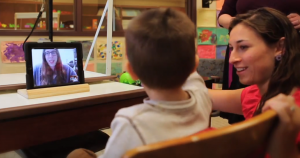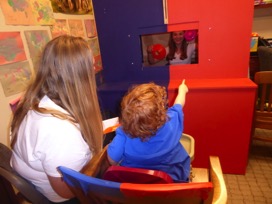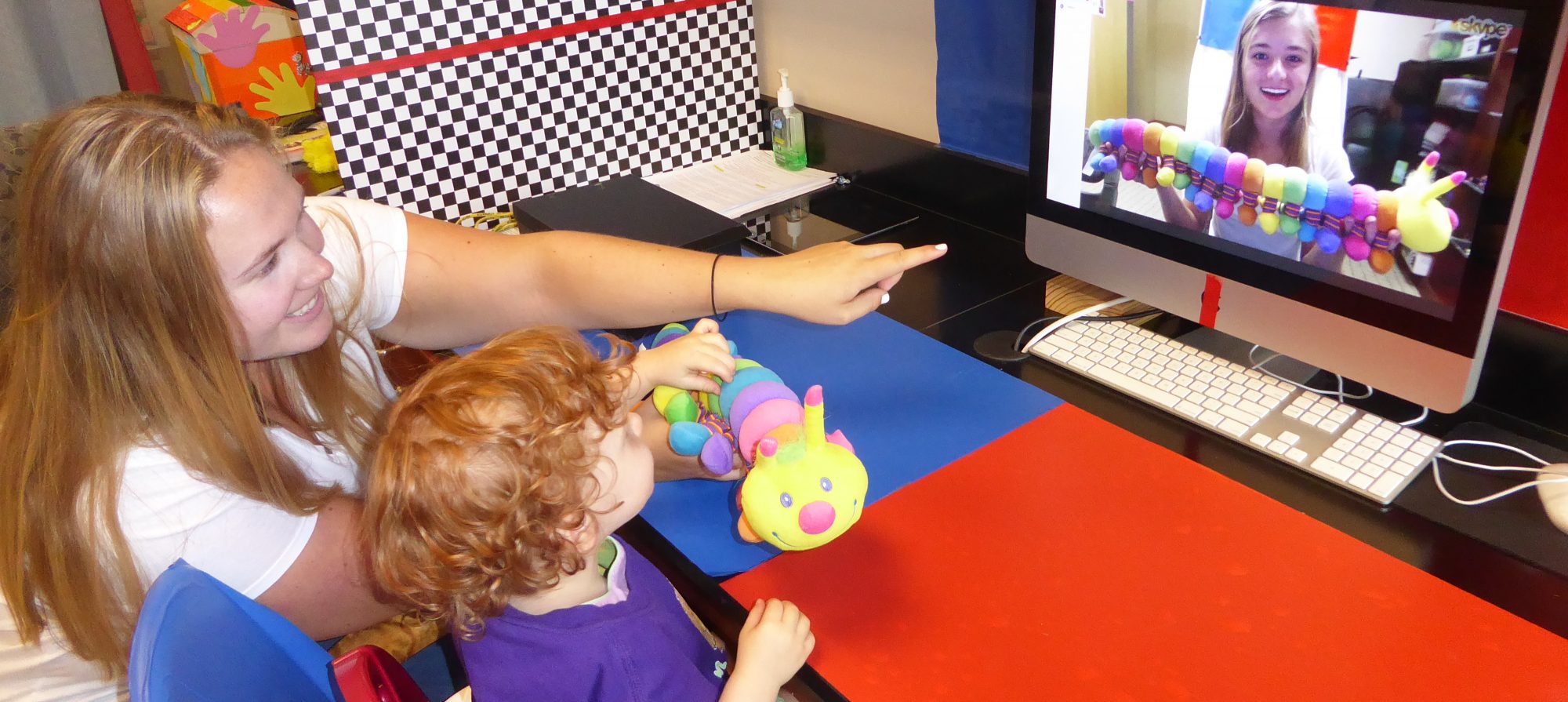
Heidi Tomik (20 months) participates in research conducted at the Lafayette Kids Lab. From left: Christiane Conn Tomik ’03 (Alumni Relations), Rachel LeWitt (’13), Lauren Myers (Psychology Department) and Renee Gallo (’14). Photo by Ken White / Zovko Photographic LLC. All Rights Reserved.
The Lafayette Kids Lab, part of the Psychology Department at Lafayette College conducts top-quality scientific research on how and why people of all ages think, remember, and feel. In our lab, we try to “get inside the head” of children to find out how they understand the world differently than adults. We are trying to learn more about how children understand symbols. We all use symbols everyday – we use language to communicate with one another, we view photographs to remember happy memories, we use maps to navigate to unfamiliar places, we view videos to learn new things, and so on. For adults, these are easy things to understand, but children face the daunting task of making sense of the world around them. They have to learn how to read maps, how photos & videos differ from the real world, and how to communicate information through drawing and writing. How do they do this? In our studies, we aim to understand how children develop this understanding of symbols that adults take for granted.
Video is a great example of how children have to learn things that adults understand effortlessly. Adults can see a video of a city they’ve never visited and can learn new things about that place. Young children don’t necessarily understand video in this same way. They are accustomed to video being a passive experience – for instance, Dora the Explorer doesn’t answer a child’s questions and Thomas the Train doesn’t call the child by name. That is very different from the interactivity that is so important in early learning. When a child has a face-to-face conversation with another person, the partner responds to the child, asks questions, answers questions, names things that the child points to, looks where the child looks, etc.
In our current study during Fall 2012, we are studying children’s learning from video interactions with people. If you and your child have ever used programs like Skype or FaceTime to connect with far-flung loved ones, you might have wondered what your child thinks about the person “in the computer.” That’s what we’re studying! Typically-developing children ages 12 to 24-months are eligible to participate and families will receive $50 as compensation for the time spent with us.
For more information about who we are, where we are and what we do, check out the sections above. If you’re interested in participating in one of our studies, please call us at (610) 330-5870 or e-mail us at LafayetteKidsLab@gmail.com

My daughter is 15 months old. Was just wondering what the time commitment is to join in this study.
Thanks!
Janine Swauger
neener19@gmail.com