FARMSENSE Safety Plan and Risk Assessment – Last Updated: 09/30/2026
Safety is one of our core design requirements, not an afterthought. The safety of our teammates and anyone interacting with our project is a very high priority for FARMSENSE. All team members are expected to maintain professional safety standards at all times while working in our design spaces, labs, and LaFarm. No project milestone or deadline is worth an injury.
Constraints, and Safety Equipment
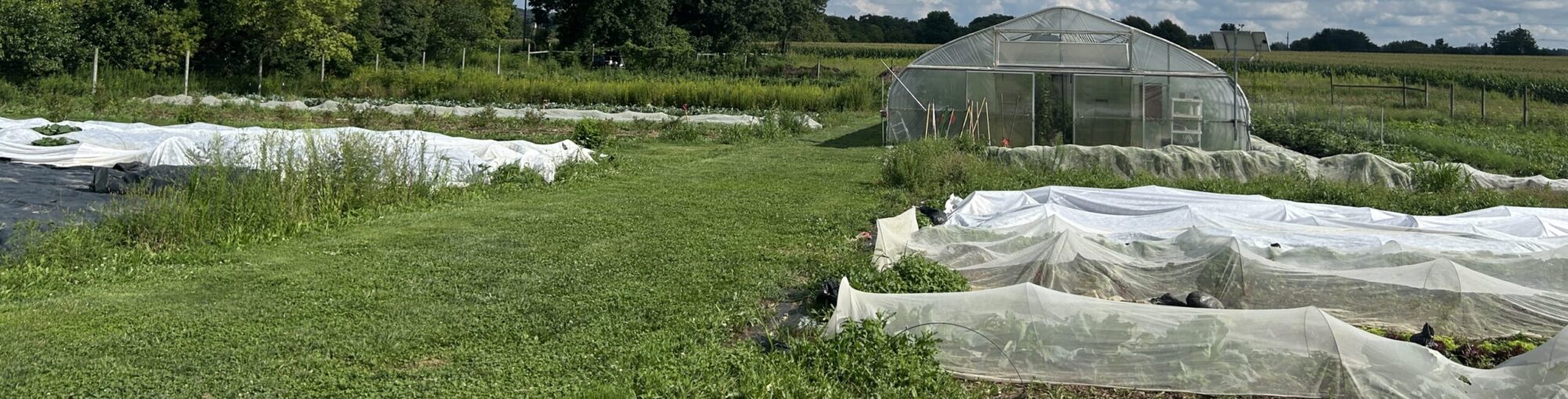
This system is based in the empty greenhouse on the far side of LaFarm. The project will be constrained by durability, as electronics will be exposed to dirt, humidity, water, and variation in temperature and weather conditions. The locations where sensors can be mounted are limited, as are the best locations to place the solar panel. These considerations could pose environmental hazards.
It may also be difficult to implement in LaFarm due to the ground freezing over in the winter, so final implementation must wait until the spring when the ground thaws. We may be working in nonideal weather conditions. Environmental constraints which have been considered and are likely to be encountered are primarily the harsh conditions of the raw, agricultural setting as well as repeated repurposing of the greenhouse in which the project is intended to go.
The system must be implemented in a way that does not provide a tripping hazard within or outside of the greenhouse. It also must be completely insulated and checked for exposed wiring to prevent an accidental shock to someone. All High-Voltage connections must be labelled and locked away from untrained personnel, following the Lockout/Tagout regulations given by OSHA.
We are also constrained by the hard deadlines of this class. All project work must be done by the end of the Spring 2027 semester. Also, all students and LaFarm workers have different schedules, making going to LaFarm potentially difficult to plan.
In order to ensure safety of all parties involved, everyone interacting with or testing our prototype or final product will be required to use proper safety equipment. While working in a lab setting with electrical equipment, each group member should abide by the ECE Laboratory Safety Policy guidelines. This includes the following: closed-toed shoes must be worn at all times; shirts must cover the torso and shoulders; long pants should be worn whenever safety glasses are required; loose-fitting clothing, drawstrings, scarves, ties, and baggy sleeves should be avoided; long hair must be tied back; rings, watches, bracelets, and dangling jewelry should be removed before bench work.
In addition, group members must always be able to locate the nearest fire extinguisher, first aid kit, and eyewash station before beginning lab work. While soldering, cutting or trimming component leads, working with chemicals, or performing any mechanical fabrication, safety glasses must be worn. Insulating gloves are required for any work at or above 50V. Where arc flash is a credible risk, a face shield is required in addition to safety glasses. If any equipment is damaged, it must be reported immediately to the Lab Specialist.
Transportation Procedure
This project requires occasional trips to LaFarm, which is around a 10-15 minute drive. We will follow all guidelines outlined in the Lafayette Public Safety Transportation Procedures [1]. Only drivers approved by the school and given the van safety training may drive the vans. The driver will stay focused on the road and, to do so, will not change the radio, adjust the AC, look at directions, or be on their phone even at red lights. Any adjustments or directions should be the passenger’s job. Personal vehicles will not be used for transportation when it can be avoided; just the van. The vans should just be used for transportation to/from LaFarm. Someone should get out and be behind the van while backing up to direct the driver (the driver’s window should be open to aid in communication). We will also just drive during the day, never at night.
Interaction with Individuals Outside the Team
This project involves interacting with individuals working at LaFarm. Our primary contact is Josh Parr, the LaFarm manager. While working to install or test the project, we will aim to not impede Josh’s work at the farm, and we will always inform him when we plan to do work there.
Environmental Safety and LaFarm Procedures
At LaFarm, strenuous activity should be minimized, and two people should work together to lift heavy objects. As a general rule, anyone on our Senior Design team should have a partner while working on LaFarm to avoid serious injury. We should avoid running or moving erratically on LaFarm to avoid injuries.
Within the Lab and on Lafayette campus, we will follow all Lafayette College Electrical Safety and ECE Laboratory Safety guidelines [2,3].
Prototype Fabrication Procedures
Major safety hazards in prototype fabrication processes will largely derive from tool usage, part assembly, and voltages associated with powering the developed devices.
Tool usage should be done only by qualified and experienced individuals and should be limited to strictly necessary operations. Design will largely be done using CAD and ECAD software, and designs should limit tool necessity as much as possible.
Prototype assembly introduces the possibility of farm-work related injuries and cuts/knicks from putting parts together. Prototype and final implementation assembly should be done in-lab as much as possible and work done on the farm should be done only after notifying a teammate or farm worker to ensure that somebody is aware of work being done and the potential risks that come with it. Work should be done on level ground and utilizing proper safety procedures for all equipment used.
Voltages should be limited strictly to the requirements of the system and acknowledging power/current ratings of individual parts. Voltage access points above 30V should be marked as ‘high voltage’ to warn both teammates working on the project and civilians passing by the installation of potential danger. No circuit operating with a voltage above 5V should be worked on while live, and the potential for short circuits should be analyzed before any work is done on any energized circuit.
Soldering and any other heat-based equipment usage should be done according to the ‘buddy system’ requiring that at least one person not actively working on the same part of the project should be present and aware of work being done. Powered tool usage and work on energized circuitry should follow this same ‘buddy system’ rule.
All physical prototyping and installation work should also be done according to the ‘buddy system’ and should never take place after midnight.
While working with the higher voltage PV equipment (Panel and battery), we will use safety tools such as insulated electrical gloves and insulated electrical crimpers/other wire cutters. Solar panels in the presence of light are energized at all times, meaning precautions must be taken to ensure the constantly energized wires coming from the panel are handled using electrically insulated equipment.
Motor Safety Procedures
Our system will include multiple powerful motors that move vents and control airflow throughout the greenhouse. When working with motors like these, it is essential to take safety precautions to minimize the potential for injury, fire, and motor/component damage. To start, we will avoid motors operating at 50 V or greater; students are considered unqualified to work on or near exposed energized parts at those voltages. The Lafayette Electrical Safety Program specifically states that students shall not be permitted to work on or near exposed energized electrical equipment operating at 50 V or more. These motors also bring mechanical risks alongside electrical. When working with energized high-torque motors, avoid loose clothing and/or hair to mitigate the risk of them getting caught. Thermal protection must be included in the motor to prevent damage/risk of injury from overload heating, which can be hot enough to cause burns and surrounding fires. For wires feeding our motors, guidelines require electrical that they have overcurrent protection that does not exceed the rated capacity of the circuit, and other electrical sources must also be properly fused and grounded. Lastly, an emergency “kill switch” disconnect must be installed to ensure the system can be de-energized quickly if a higher-voltage component like a motor becomes unsafe due to any of the reasons listed above.
Battery/Energy Storage Safety
There are many considerations for battery and energy storage safety since we are dealing with Electrical parts in our design process. Firstly, LiFePO4 is the preferred battery chemistry according to the Lafayette Electrical Safety Program [2]. The battery must also be appropriately sealed off with proper insulation from excessive moisture/farm debris. All energy coming from the battery must be transported through properly insulated, water-resistant wiring. Explicit approval from the department is required for systems above 50V, as stated in the ECE Laboratory Safety Guidelines [3]. The batteries should be inspected for damage before testing or installation. Metallic objects near battery terminals should be avoided, and batteries should be stored in a way which avoids a short. Batteries should be stored in a cool, dry place, away from flammable materials at all times. Battery charging in the lab should be done with someone present, and the battery should be inspected both before and during the process [3]. Batteries should not be charged using current above their rated C-rate. A “Buddy” System, an extra person monitoring an energized circuit or component, is recommended for working on any electrical component under 50 Volts and required for working on any component over 50 Volts according to the ECE Laboratory Safety Policy & Guidelines [3].
References
[2]Lafayette College Electrical Safety Program
[3]20260824_ECE_LaboratorySafety_Policy_Guidelines_1.2.pdf