La Via Campesina: a profile by Eszter Hiscott
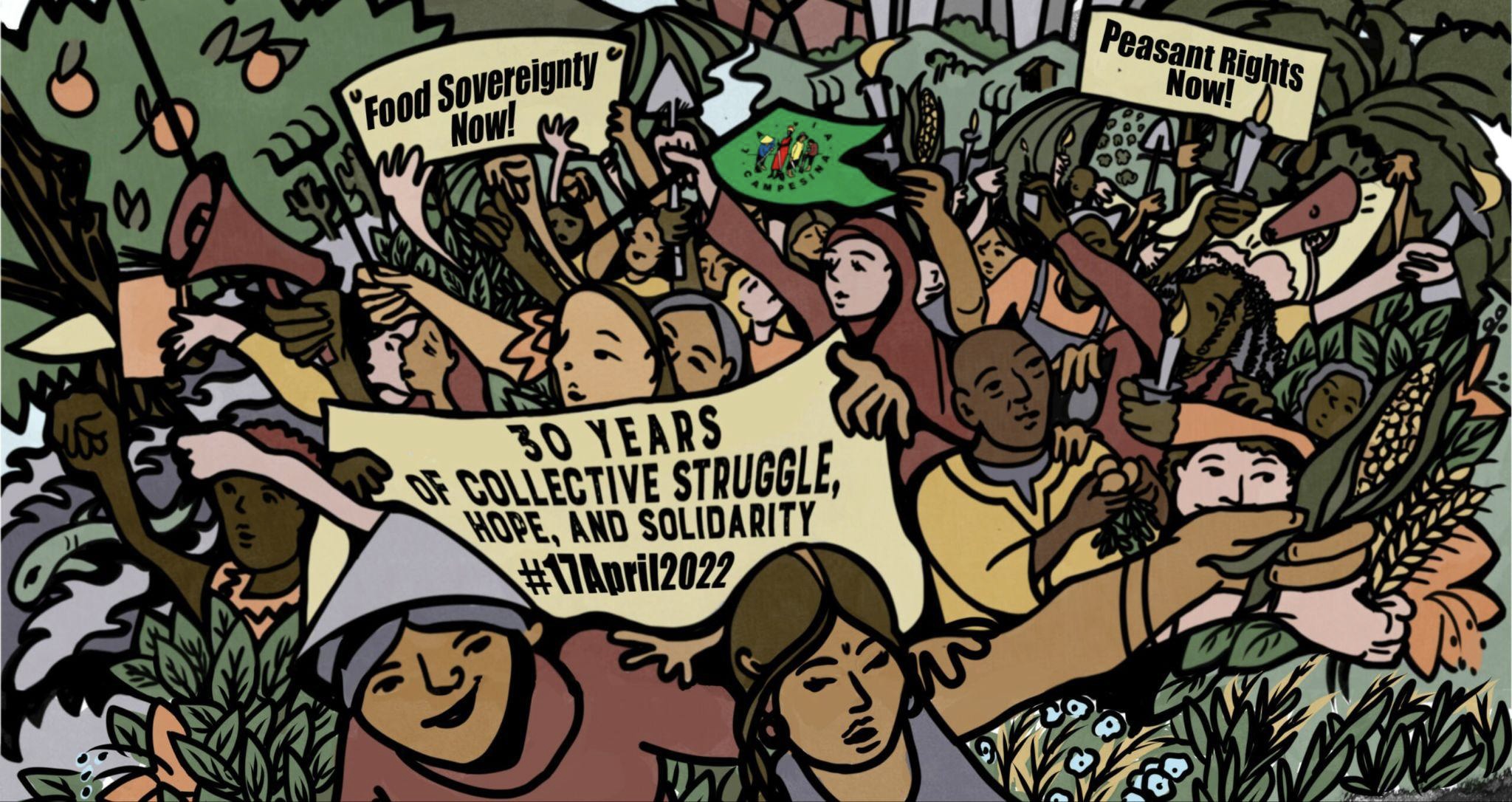
La Via Campesina is a powerful, grassroots movement committed to achieving its main goal: Food Security worldwide. “La Via Campesina” translates to “The Peasant’s Way.” This organization emphasizes the word “peasant” because they see it as an honorary title, and that one who is a peasant has a close relationship with the land. In this episode of “The Seeds of Resistance”, I highlight the organization, their goals, and the overarching “call to action”. I hope you will find this episode meaningful and take away something impactful.
One point that you touched on in your podcast was that La Via Campesina was looking to change the connotations surrounding the word “peasant”, trying to reframe it from referring to someone who is a poor farmer to someone who has a close relationship with the earth. This effort is not just giving sovereignty and self-determination back to the people, but it is also a decolonial effort through their work against the capitalist world systems that define our social and food systems. Food sovereignty and CACR are topics that we have focused a lot on throughout the class. These are two principles that it seems the LVC is built upon, allowing these marginalized communities to gain recognition for themselves as many communities we have discussed in class have done through grassroots and community efforts just like this. I liked the call to action at the end, encouraging people to take their own steps to help the environment and work alongside the LVC.
Reading your podcast abstract reminded me of the conversation surrounding bread in The Menu. Wild reference, I know, but bear with me. Chef Slowik tells the diners: “Bread has existed in some form for over 12,000 years, especially amongst the poor. Flour and water. What could be simpler? …. Ancient Greek peasants dipped their stale, measly bread in wine for breakfast. And how did Jesus teach us to pray if not to beg for our daily bread?”
There’s something deeply innocent and sincere about eating our daily bread. Yet the guests in the film don’t receive bread. They are not the common man.
When we read “Mapping the Food Movement” by Teresa Marie Mares and Alison Hope Alkon, we discussed the various discourses involved in food movements. Food sovereignty was one of those discourses, and we worked to distinguish it from Local Food, Community Food Security, and Food Justice. In listening to your podcast and writing my own, I’ve come to see food sovereignty as the ultimate goal that encompasses all of these frameworks. As La Vía Campesina defines it, food sovereignty is “the right of peoples to healthy and culturally appropriate food produced through ecologically sound and sustainable methods, and their right to define their own food and agriculture systems.” To turn away our daily bread is to symbolically disregard the labor and care invested in producing it. La Vía Campesina’s motto, “Globalize the struggle, globalize the hope,” reminds us to be respectful of the labor that sustains our food systems. We cannot afford to detach ourselves from the experiences of the common man. We need to honor and remain connected to that identity as to not be dependent on commercial conveniences.
Your discussion of the meaning of the word “peasant” was interesting and something I hadn’t considered before. It’s also interesting to consider the implications of this connotation on the peasants themselves. It leads me to wonder if the new meaning imposed on the word, one that speaks to the power gleaned from having a strong connection with land, has had any effect on the treatment of peasants and the land that they work, of course alongside the work of La Via Campesina.
I enjoyed your elaboration on neoliberalism in the context of La Via Campesina. It’s something we briefly discussed in class but wasn’t fully expanded on. I thought your insight into food sovereignty as La Via Campesina’s main goal was interesting and relevant to what we had learned throughout the class.
I also liked the call to action at the end and the connection to CACR, specifically the use of “you”, as it calls out the listener directly.