Leah Penniman: a profile by Sebastian Bjorkeson
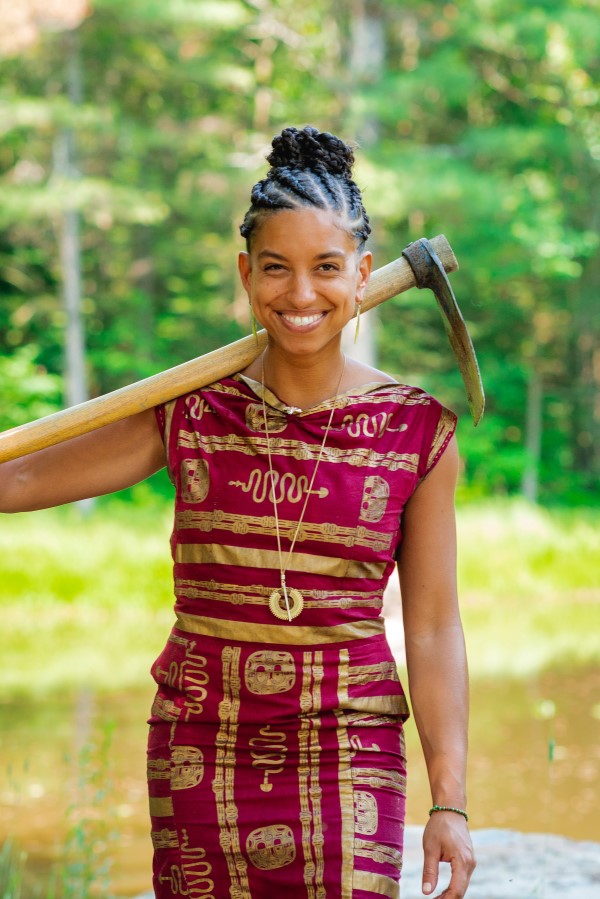
Leah Penniman is a Black Creole farmer, educator, and food justice activist whose work has become a cornerstone of the movement for racial equity in farming and land stewardship. This podcast explores Penniman’s journey from alienation to activism, and the creation of Soul Fire Farm, a transformative space in upstate New York committed to uprooting racism in the food system. Through immersive storytelling, farm ambiance, and direct quotes, the episode traces Penniman’s early experiences with discrimination in agriculture, the radical inspiration she found in reclaiming farming, and her broader mission of land justice. At the center is Farming While Black, her groundbreaking manual blending practical skills with cultural empowerment. The podcast emphasizes how Soul Fire Farm has become a national model, training Black and Brown farmers, restoring ancestral agricultural practices, and driving policy change. By connecting food justice with racial justice, Penniman shows that farming is not just about food, it’s about sovereignty, resistance, and healing.
Similarly to what you did in the midterm podcast, I liked how you included recommendations for what people could do or read to become more educated on the topic and mission of Soulfire Farm and Leah Penniman. You addressed many topics we have discussed in class, including how black farmers are at a significant disadvantage, owning so little land and being uneducated on traditional and ancestral farming practices. I liked the quote that farming while black is an act of defiance and felt that this one line was a good summary of what the podcast and Leah Pennimans mission are about.
An element I’m disappointed I didn’t include in my podcast is the use of specific stories and quotes from my focus figure. The clips you selected from Leah Penniman were wonderful. While I’m familiar with the seed-saving practices of enslaved Africans, hearing Penniman share the story of her own great-great-great-grandmother made that history feel deeply personal and heartfelt. She leads you into the rationale and emotion towards the decision to save seeds, which is a headspace lost with today’s commercial availability. Furthermore, her dialogue helped me better understand how her passions grew from a desire to reconnect and honor that legacy. “I have to be reminded,” she explains, “that if they didn’t give up on us, then who are we, in much less dire circumstances, to give up on our descendants.”
Her statement about being disconnected from the land, how farming was seen as something “other” people did, is also a personal statement. The Food Project introduced her to farming as a form of empowerment, and her words, “tending the earth can be a radical art, rooted in care, culture, and resistance,” echo many of the themes we’ve explored in this class. Even though there are still terms and conversations I don’t feel fully confident explaining, I have a real sense of pride and appreciation in having been introduced to the conversations. I may not be a Tennessee FFA member, but I am and will always be a participant in the Tennessee foodshed.
I enjoyed this podcast as an elaboration on her podcast interview we listened to in the beginning of the semester, especially her upbringing. It’s interesting to compare her separation from food production with Amirah Mitchell’s connection to the land and nature.
I appreciated the clips you included. The first one resonated with me in particular, especially the part where she references that it’s easy to give up and forget that our world is built on stolen land and stolen labor. Her acknowledgement of this fact as such an important figure in food justice is refreshing, and I’m glad you included it.
I love learning about Soul Fire Farms, and it seems like something that does many of the things we discussed in class as being necessary for food reform. I also enjoyed your explanation of why Leah Penniman’s story matters to you.
I really enjoyed how you started your podcast, with a quote from Penniman as a powerful opener. I enjoyed learning more about Penniman and Soul Fire Farms, especially after discussing her in our class. I liked the audio that you used, and where she said something along the lines of not giving up. I thought that was very powerful, and I tied it back to my podcast on La Via Campesina. LVC also advocated for connection to the land and believed that it was a form of resistance against the mainstream. Overall, I liked your podcast, including your personal insight about understanding more about what food justice entails at the end of the podcast.
I really loved how you brought Leah Penniman’s story to life and showed how deeply personal her connection to the land is. The way you included her quotes and farm ambiance made the message so powerful and grounded. Her reflections on seed-saving and honoring her ancestors were especially interesting—it reminded me how farming can be an act of resistance and healing. I also appreciated how you explained Farming While Black not just as a manual, but as a tool for empowerment and reclaiming identity. The podcast did a great job connecting food justice with broader themes of racial equity and legacy.