Francesco d’Ambra and Ugolino Martelli, Il Furto (The Theft), ed. Vanni Bramanti, Linda L. Carroll, Anthony M. Cummings, and Alexander Dean (New York: Italica Press, Inc., 2025)
…an edition of the original Italian text of a famous Italian Renaissance comedy, with an English translation, introductions to the play, the playwright, and the composer of the accompanying music, and an edition of the madrigals intended as entr’acte musical entertainment….
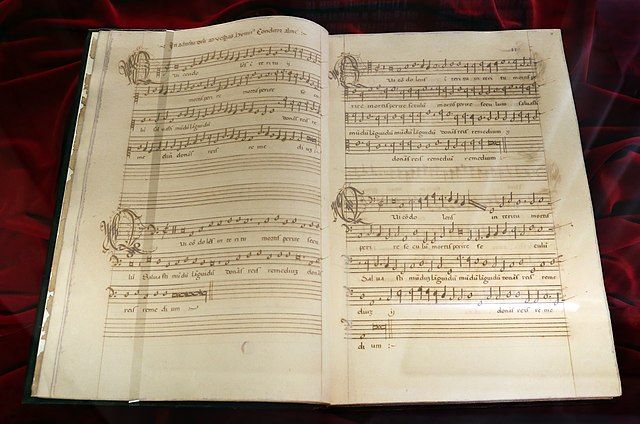
“This volume presents a new edition of the first English translation of Il Furto, Francesco D’Ambra’s Italian Renaissance comedy….[T]his bilingual edition, while renewing attention to D’Ambra’s place within sixteenth-century Italian comic traditions, will also prove valuable to both scholars and students of Italian Renaissance theater….For the very first time, this volume presents the text of the play alongside the entr’acte entertainment materials. Given the heterogeneity of the texts included, an exceptional team of editors has been assembled to address the edition’s various components. Vanni Bramanti…provides a critical apparatus enriched with important historical information on the author and the play; Linda L. Carroll offers an impeccable translation that conveys the many registers of spoken Tuscan employed by D’Ambra across the play’s wide range of characters;…Previous editions of Il Furto were all based on its first printing….This new edition deserves particular attention because the text presented here is, for the first time, based on the only manuscript known to date….According to Bramanti’s introduction, the manuscript can be considered an autograph…, and is enriched with marginal annotations that function as a kind of director’s notes, leading Bramanti to suggest that it may have been one of the scripts distributed to actors in preparation for the original performance. This edition also has the merit of reintroducing the original madrigals and music of the intermedi. D’Ambra’s Il Furto is quite unusual in the history of Italian Renaissance theater in that its entr’acte materials have survived. The volume thus makes available, in an unprecedented way, the complete materials for a single festive theatrical event from the mid-sixteenth century: the full text of Francesco D’Ambra’s comedy, Ugolino Martelli’s intermedi texts, and Francesco Corteccia’s musical settings.”
~ Renaissance Quarterly LXXIX/3, pp. 1001-03