Samin Nosrat: a profile by Sofia Ruggerio
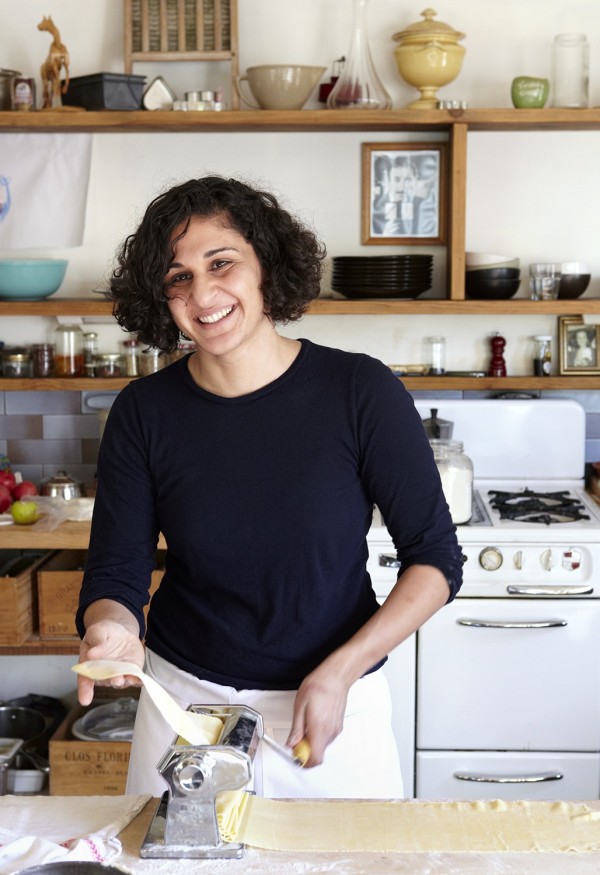
This podcast explores Samin Nosrat’s work to educate people on food, culture, and cooking as a whole; While demonstrating this through her intrinsic practice with food, rather than the typical view of cuisine from Americans. She is the author of Salt, Fat, Acid, Heat, the James Beard Award-winning cookbook that became a New York Times bestseller and a Netflix Documentary series. We see how her upbringing as an American-Iranian shaped her views on culinary practices, and her groundbreaking moment at “Chez Panisse” —Which confirmed her decision to follow her dreams in the cooking world. This eventually brought her to Italy, learning from top-class chefs on cooking and the holistic ways of culinary food. It was soon enough until she came to a realization to the main pillars to cooking—Salt, Fat, Acid, and Heat. This is what motivated her journey to becoming a best-selling author and part of Netflix series. This way, she had the opportunity to educate Americans of the intrinsic nature of cooking, and how cultures are deeply important in learning about these techniques. These four pillars are intrinsic and natural to many cultures around the world, and her realization came to teaching Americans about this. In her Netflix series, she travels to Italy, Mexico, California and Japan and integrates her four groundbreaking pillars to each tradition. Samin also puts an emphasis on community and bringing people together when it comes to food—and what that really means. Her perspective on food and understanding culinary cuisine serves a great guide for Americans to learn through her lens—and what it means to cook with love. All around the world, we see how culinary food is brought from generational knowledge, where the core values and skillset is intrinsic. Samin Nostrat serves as the educator to Americans who never got to gain this perspective of food growing up. Her work gives the audience an opportunity to shift from marketing muppets of the industrial food system, to learning behind what food really is at its core—the intrinsic values that bring people to health and longevity.
Overall, I thought this was a very interesting podcast and it was well done. I liked the callback to Chez Panisse and Alice Waters as being one of Nosrats inspirations as we were told that Waters and the restaurant were influential but this provided a real example of a specific impact it had. We have also talked a lot about how food is never just about food, but about community, culture and people, creating an intrinsic relationship between the earth and people, which you touched on in discussing Nosrats beliefs about cooking. While I have heard about Salt Fat Acid Heat, I did not actually know about Samin Nosrat at all and now feel that I have an understanding of her core culinary philosophy.
I had the same thoughts as Sophia Kane when I listened to this podcast. The callback to Chez Panisse and Alice Waters was such an interesting surprise and helped place the rest of your podcast within the timeline of what we’ve studied in class. The evolution from working as a busboy to apprenticing under Italian chefs is such a wonderful transformation, and one that mirrors the journeys of other figures we’ve encountered. Malik Yakini became involved in the local food movement through his interest in Black nationalism and self-determination, while Sebastian Björkeson’s profile of Leah Penniman showed how a transformative conversation with other Black leaders led her to found Soul Fire Farm. Our paths of stewardship and leadership are often guided by others.
Here we are, in a food studies class, reading significant and relevant literature on the food movement and listening to contemporary voices like Alicia Kennedy. If anything, Samin Nosrat exemplifies the conversation that the food movement and food dialogues aren’t solely academic; they’re abstract, versatile, and rooted in lived experience and personal passion. I can’t fully speak to the cultural shifts between Italian and American cuisine, but the idea that cultural and dietary differences are shaped by deeper dialogues around tradition and identity is certainly relevant. I believe our lives can hold narrow perspective because we hold limited food palates. In being introduced to different culinary cultures, we are simultaneously being exposed to the sentiments, guidances, and meditations instilled in its recipes.
I watched Nosrat’s Netflix series a few years back, so I began listening with basic knowledge of her message. I’d say that I have used her philosophies throughout my years of cooking. It was interesting to learn about how she adopted these ideas. I remember her explaining that she was trained at a famous restaurant, but did not realize that it was Chez Panisse, Alice Waters’s restaurant. Considering what I know about her show and what I’ve learned about Chez Panisse’s role in the farm-to-table movement allows me to make connections between the values of the two and different ways of application. I enjoyed learning about the connections between diet and longevity, especially how it manifests worldwide.
I watched her series on Netflix a few years ago and found it very groundbreaking. I enjoyed learning about the connection that she had with Alice Waters. Both Waters and Panisse were motivated by food as more than a commodity and made that the primary focus of their interest. While Panisse’s series was just the beginning of learning about food for me, I liked how some of its aspects were focused on in our Food Studies class. I liked that in your podcast, you brought up how Panisse thought of food to be shared with the people around you and saw the kitchen to be considered a welcoming space. This was an important emphasis that you brought up since we discussed this in class. Overall, I found your podcast very insightful about someone who wanted to educate Americans on the importance of cooking not just the food itself.