Julia Child: a profile by Sofia Ruggerio
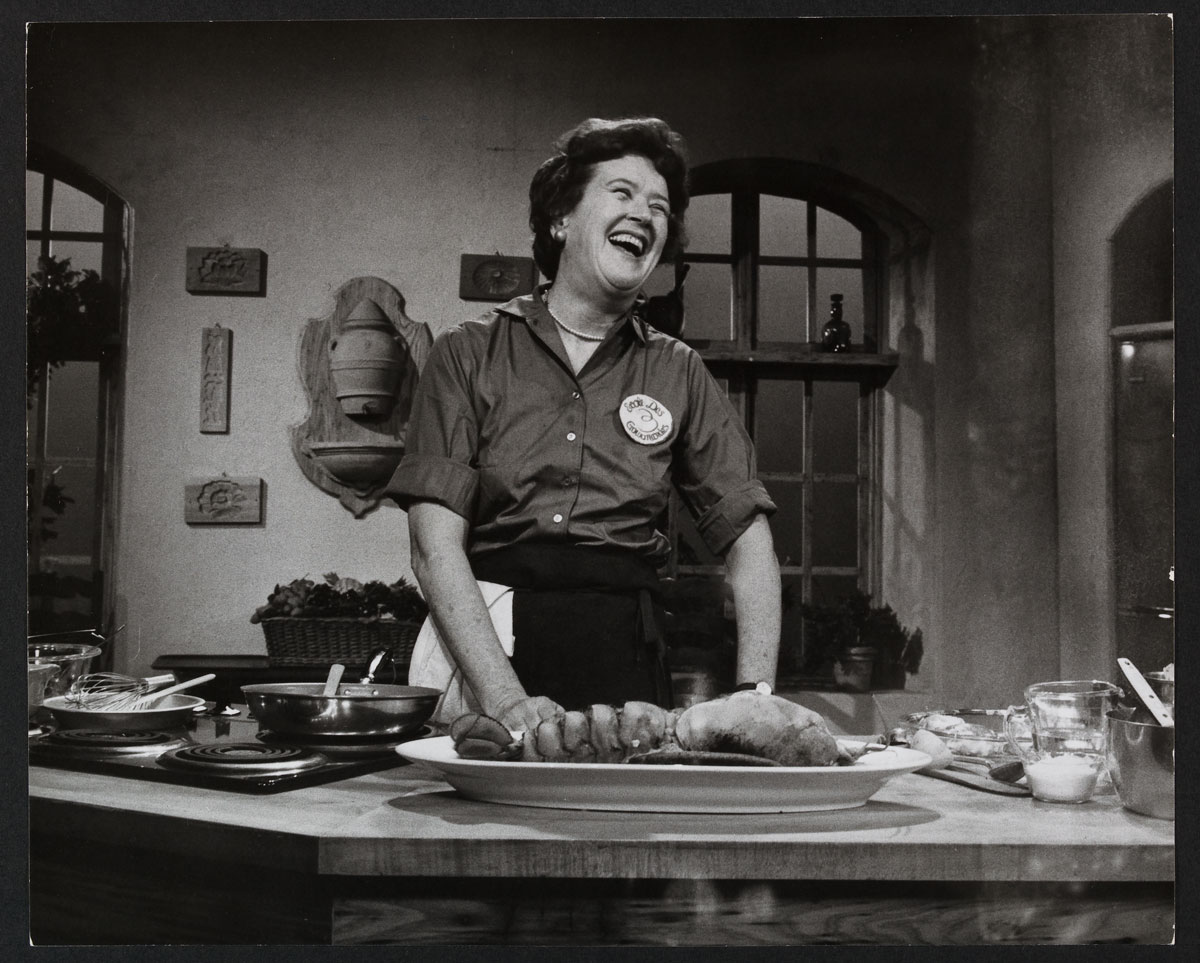
Have you ever wondered why Americans often see food as a chore, while the French “dégustent” every meal with joy and appreciation? Today, we’re diving into the story of a woman who changed the way America cooks—Julia Child. She wasn’t just a chef; She brought the art of French cuisine into American homes and reshaped the way we think about food.
(A) Julia Child demonstrates how a single personal experience can ignite a lifelong passion, irrelevant of when it occurs. Julia Child had no formal culinary training and didn’t discover her love of cooking until well into her thirties. Through that experience, Child disconnected herself from the industrial agriculture she had become accustomed to. You noted her shift, stating: “the industrial food system is disconnected to food and has no meaningful connection to the cooking aspect.” Her Mastering the Art of French Cooking countered industrial consumerism and reconnected her audience to the joy of food in French culture. By leveraging television she created an intimate bridge between herself and viewers, much like FDR’s fireside chats just years prior. Child saw television as a resource, not as a market.
(B) Including Julia Child’s mantra effectively conveys the art of cooking: “Cooking is not just a necessity, it’s an art, a joy, and an essential part of life.” This echoes Alice Waters’s mission in California half a century later, where she worked to revive a culture of mindful eating. In describing Child’s own journey into cooking paved the way for this cultural shift, you simultaneously explain the importance and impact of cooking. In the short clip of Child speaking, she’s the Bob Ross of 1950s cooking shows. I felt compelled to follow her recipes and adhere to her guidance.
(C) My main critique is that your scrips relies on listeners to draw their own inferences. You highlighted Child’s natural, unscripted style – “Unlike the polished, scripted cooking shows of today” – though I would have appreciated a deeper analysis of how this authenticity compared to the era. A critical discussion here could tie back to Alicia Kennedy’s observation in No Meat Required that cooking shows have increasingly become market-driven rather than culture-driven. We understand the gravity of her accomplishments because we’re familiar with the era’s food industrialization, but laying out the broader context of the era will make a wider audience understand her achievements in comparison.
A) It was interesting to learn more about Julia Child and who she was. She is someone who we have all heard about but don’t know much of in terms of what she accomplished.
B) I liked how you included a quote from Julia Child herself. Also, I liked that you brought up her cookbook and what that entailed.
C) It would have been nice to hear a comparison between Child and modern day cooking shows or cookbooks.
Overall, I thought this was a well thought out and well explained podcast. While I had a general idea of who Julia Child was, I didn’t actually know much about her or what she had done. I learned that prior to her moving to France, she did not have any cooking experience which resulted in the large impact that French styles of cooking had on her career and personal cooking style. I liked the inclusion of the audio clip of Child which I felt helped to further your point on her beliefs on the impact of cooking. The one area where I thought you could improve was in your speed. I think it would be helpful if you slowed down a bit while speaking to give each point a little more time and help with overall clarity.
I liked that this profile didn’t focus solely on what Julia Child was doing in the world of American food culture, but the impact that it had. I had seen Child on TV with my mom a few times, but I did not have the background on her life and legacy that the podcast provides. Her exposure to French food and culture through a trip to France was reminiscent of Alice Waters’ story, in which she studied abroad in Paris and experienced a complete mindset change in regards to good food. A main point I gleaned from the podcast is that Child revolutionized the American relationship with French cooking as well as the cooking show sphere.
I thought the clip of Child speaking on a cooking show was effective in communicating her passion for cooking. It helped me, at least, concretely tie Julia Child to a time period based on the staticky quality of the audio recording. I also enjoyed the introduction music; it was a good way to set the scene for a podcast about French food.
I felt that the story had potential to have a bit more connection to the material covered in class. You touch on it in reference to the disconnection between Americans and where their food comes from, but it could be beneficial to briefly elaborate on how it got that way. Though I think the audio clip from her cooking show was necessary, it seemed randomly placed and didn’t connect chronologically to her experiences in cooking school. A bit of an introduction or analysis of the clip would have solidified its purpose in the podcast.
I thought this podcast was fantastic, and deeply interesting. It felt like you were telling me a story, and the flow of the podcast was great. The input of audio clips made it easier to connect with Julia Child. I also thought it was impressive and interesting how you can connect food so much with art. There were also many connections with that we have discussed in class. I thought it was very important how Julia Child also went against the norm, for example, during her time diet culture was on the rise, although she fought against this, while still using dairy and butter. Overall, I enjoyed the podcast a lot and I believe it was very interesting to learn about Julia Child through the eyes of yourself. One small improvement could maybe be to add some music throughout the podcast to emphasize certain parts of importance, or speak a little more energetic throughout the podcast, although otherwise it was a great listen!