As I strolled through Wawa in search of a potential package to photograph, I came across a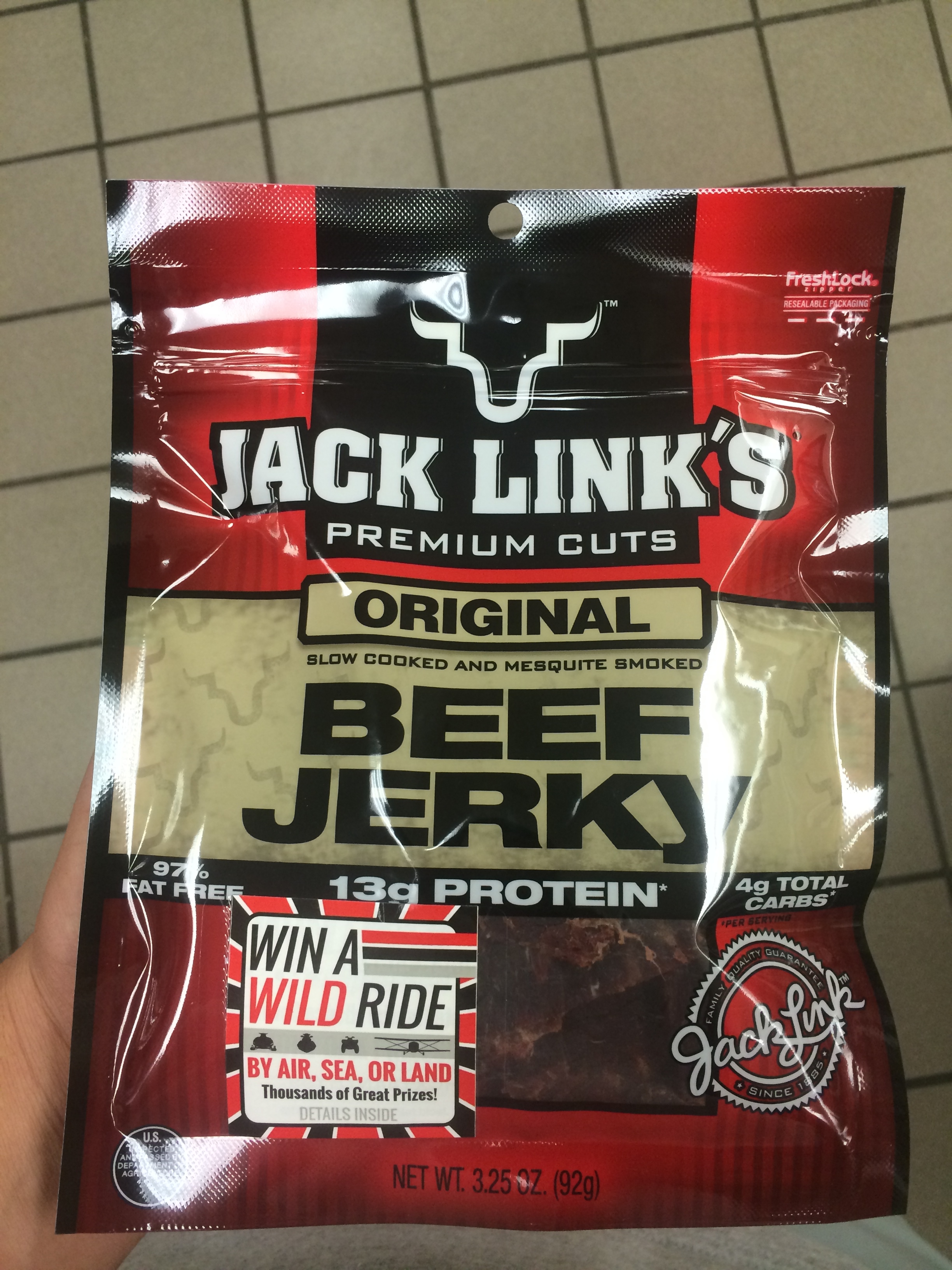 Jack Links Beef Jerky package. There is an image of a bull on the front and back of the package. The black outline of a bullhead is the well-known logo for Jack Links Beef Jerky. The animal is depicted in a masculine manor. An emphasis on the head and especially including the horns in the logo gives us a feeling of strength and toughness. Jack Links Beef Jerky marketing definitely targets men of all ages. The bullhead is pinnacle for men to believe that if they eat this product they too will become tough and strong like a bull. The image also takes on a phallic look, more so targeting the male gender and the concept of mascunlinity. The terms Jack and Jerky are relatable by men because it may suggest a euphemism for masturbation. The animal isn’t really doing much in this image. We don’t even see the face of the bull just the black outline as a logo, and there is not real setting. Perhaps this is to detach the buyer’s thoughts from what they are specifically eating (an animal) instead of the concept of what they are eating. The animal is being represented solely as a product, to be used for instrumental purposes only. John Berger would also recognize the animal being used for its instrumental value as seen in his essay Why Look At Animals?
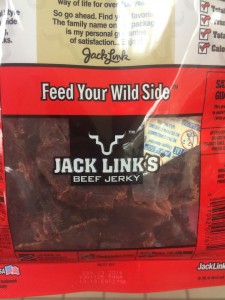 If Jonathan Foer, author of Eating Animals, were to analyze this package, I could assume the numerous assumptions he would make about it. When seeing the image of the animal he would be curious to what type of animal the beef is coming from? As the image seems to depict a bull, he may argue that the company is unsentimental towards animals since we can’t directly identify what animal is in the logo. He could argue the animal may be some other beef processed animal like a cow. He would than most likely question how this animal was farmed, factory or family? Or he might not even bother with that question considering he believes soon enough the term factory farm will fall out for a few reasons. First in his hopes that there will be no more factory farms, or second that there will be no family farms to compare them to. Foer would want to know whether the meat was Kosher or not. Coming from a Jewish heritage and especially the consequences his grandmothers endured during the war, this would be important. Kosher would be defined as that if humans must eat animals, it is done respectfully and free of suffering. Foer would probably agree that along with this package comes a familiar story. Its the same story the male gender has been told about eating meat since we can remember. Eating meat makes you big and strong. I can remember my nonno (italian for grandfather) would always tell me to eat a lot of meat and I will become a strong man like him, then he would flex his arm. Whether its the stories we are told, or what the media projects, eating meat has always been seen as a form of masculinity.
I thought it was really interesting how you noticed that this package links meat-eating to masculinity. Since I was curious about this, I did some research and according to Huffington Post’s article, there are definitely more vegetarian/vegan women than men. The article is called “Veganism is a Woman’s Lifestyle, According to Statistics” and can be found at http://www.huffingtonpost.com/2014/04/01/vegan-woman-lifestyle_n_5063565.html if you are interested in looking at the statistics.
Following up on Sonia’s comment, one of the most important books on gender and food is Carol Adams Sexual Politics of Meat.