Problem Definition
To scope our problem, we used two methods of outreach: interviews with key stakeholders and a survey of student farmers. The problem we identified was a lack of effective tool storage for students and community members. We sent a survey out to student farmers and got nine responses. We also conducted three individual interviews with the head farmer, a student, and a faculty advisor. We learned that over the summer, community members complained about students misplacing tools and that Josh had even emailed students about the issue. We felt that this was an issue that we could reasonably work on, given the time constraints and expertise that we had. Our final solution to this problem was to create preliminary designs for a visually interesting tool organization area. This area would be constructed with help from art students and/or the visual arts department. Though there are a few designs proposed here, the most feasible solution would depend on who was spearheading the project, and the potential source of the funding for the project.
In speaking with Mr. Parr and the students, we learned of several problems that we might address with a functional art piece. The greenhouse is not heated year-round, and the water in the pipes freezes during the winter, causing them to burst. Another problem is the unpitched floors and ill-placed drainage holes. The ground is uneven, and the drains are at the high point of the floors, meaning that water tends to pool under the growing beds instead of flowing into the drains. We decided not to seriously consider these problems as ones that could be solved via our functional art project. It would be too technically challenging because the members of our team did not have experience working with water systems, and we could not conceptually imagine a student-led project to fix the drainage problem without having to get contractors to level/pitch/add to the floor. We decided it was outside our realm of expertise as Engineering Studies majors and could not be executed well by us, given the one-semester time constraint.
Another issue concerned the greenhouse as a modular space. The greenhouse is currently used as a classroom and event space aside from the usual purposes of growing plants. In the current setup, farming beds are elevated off of the ground by cinder blocks. This is so that when there is an event in the space, the makeshift “tables” can be disassembled and stored elsewhere. We briefly discussed ways that we could redesign the risers that the growing beds rest on to maintain its functionality and flexibility, while creating a system that would be lighter and look more intentional and aesthetically pleasing than the current setup. We thought we could include ME 210 (Manufacturing & Design) classes in the fabrication of the risers to further engage Lafayette students with LaFarm and lower costs.
Eventually, after further developing the idea, we decided not to pursue solutions to that problem because of how challenging it would be to execute and how well the current setup functioned for the community of greenhouse users. Mr. Parr said that the cinder blocks currently in place work well for the given purpose and from our survey of students, we found that most respondents favored a tool storage installation over plant bed mobility. We also felt that attempting to involve ME 210 classes may be difficult, as it would involve edits to the lesson plan to accommodate our project, which could be hard for a group of students to do without throwing off the schedule of the course.
We discussed with a paid student volunteer, named Dylan Fletcher, an issue with Lafayette/student tools being mixed up with that of community gardeners’, and just general disorganization resulting in dissatisfaction from community members. We confirmed this information in our conversations with Josh Parr as well, which explains why our survey returned a higher percentage of respondents wanting a solution for tool organization over plant bed mobility. Based on the survey results and our conversations, we explored design options for both but decided to move forward with solutions for tool organization.
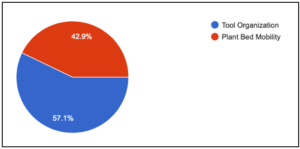
Figure 3: Survey Responses for which Solution was Preferred
Parameters
Based on our interviews with our three key community stakeholders, a few important parameters for our project began to emerge. We pursued two design scenarios: plant bed organization and tool storage. For the plant bed risers, it was important that they be strong like the existing cinder blocks, but also lightweight enough that they could be easily moved and stacked. Each plant bed weighs 60 lbs without plants, so they would need to withstand at least 90 lbs (including plants).
For the tool organization installation, the first was obviously to include pegs and/or hooks to hold tools. As a tool organizer, this would be the most important component of its function. As well as smaller pegs/hooks, larger hooks and compartments would be needed to store larger tools like shovels. There should also be two removable bins/compartments for clean and dirty gloves. They should fit well within the art installation, but still be easily accessible so that dirty gloves can be removed and cleaned, and clean gloves can be put back.
During the final design selection and finishing, we would like for there to be a collaboration with Lafayette student artists.
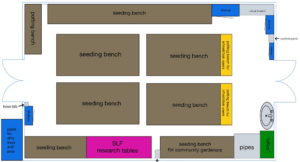
Figure 4: Existing Floor Plan of the Greenhouse
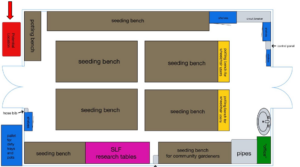
Figure 5: Floor Plan of the Greenhouse with Proposed Tool Storage Location
Whatever solution we chose would need to fit somewhere in or outside the existing greenhouse configuration (Figure 4). The risers would take the place of existing cinder blocks underneath the seeding benches, but finding a permanent place for the tool organization was a bit harder. We decided that a suitable place for that solution would be just outside the greenhouse to the right (Figure 5). When people come to LaFarm, they go through the greenhouse to get to the plots. Having the tool storage just outside the exit makes it easily accessible to both collect and return tools.
A last consideration would be to include some sort of community aspect in the design, construction, or installation process. Taking into account LaFarm as a community “place,” it is important that the community is involved and enriched by the final product and its creation/implementation process. Allowing for community ties to be made between the new artifact and the place of LaFarm might also make community members more likely to use the organizer properly, as they had a hand in its implementation. This community tie could be formed through involvement in the design, decoration, or implementation process. This would lead to the long-term sustainability of the project as stakeholders would have a vested interest in its upkeep.
Design Process
For the plant bed mobility art, we looked to public art installations for inspiration, as well as the kinds of “practice projects” done by students in Acopian Engineering Center’s (AEC) labs Currently, students in ME210 make a gearbox to practice a multitude of manufacturing skills, including welding. We thought that our design could supplement the gearbox as it also would allow for multiple different manufacturing skills, like welding and CNC machine operation, to be practiced. In thinking of the design for an art installation that served as a form of tool organization, we first turned to researching existing storage solutions, though not necessarily for tools. Bookshelves, closets, and existing toolsheds served as our main inspiration. We then created image boards for each concept (see Figures 6-9).
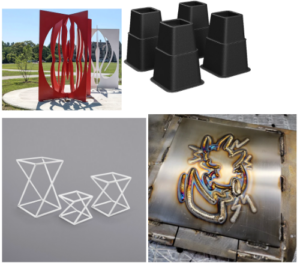
Figure 6: Inspiration for Design 1 – Plant Bed Risers
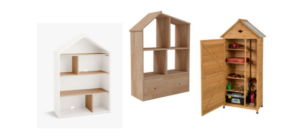
Figure 7: Inspiration for Design 2 – “Home”-Inspired Tool Shed
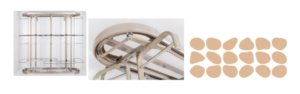
Figure 8: Inspiration Design 3 – Revolving Organizer
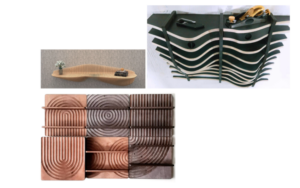
Figure 9: Inspiration for Design 4 – Parametric Shelving
Once we had solidified our ideas, we drafted a sketch for each design with rough dimensions. The result was a sketch for the plant bed risers and three possible designs for tool storage: a “home” inspired shed, a revolving organizer, and parametric shelves.
Design 1: Plant Bed Riser
Our proposal for the plant bed risers (Figure 11) is to build a hollow frame structure that is similar in shape to a bed riser (see Figure 6) but made of 0.25-inch steel sheets that have been welded together. This would make it much lighter than the existing cinder blocks, with the added advantage of being stackable. The risers could be fabricated by engineering students as a practice exercise to learn how to weld, similar to current practice projects done by the ME 210 classes. Designs could be welded into the metal, and cutouts could be made as well to reduce the weight of the riser and add aesthetic value. These risers would be installed in place of the current cinder blocks, underneath the planting beds. When in use, 4 risers would sit under each seeding bench. An 8 x 8 x 16 in cinder block like the ones in the greenhouse (Figure 10) weighs about 35 lbs, and these risers would weigh between 2-4 lbs depending on the cutouts, making them much lighter while still being able to hold the weight of the plant beds, soil, and plants. We tested the design under load using Fusion 360 and found that each riser could hold a weight upwards of 30 lbs, meaning that a set of risers under a seeding bench could hold over 120 lbs. The tapered shape also means that they would be easier to stack and store away when necessary. When there is an event in the greenhouse, the plant beds are usually stored outside, and the metal risers would survive being outdoors as well.
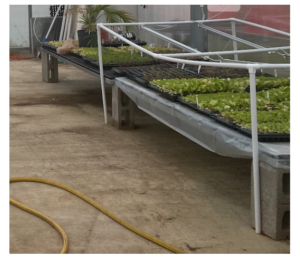
Figure 10: Existing Cinder Block Risers
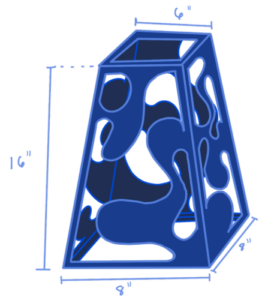
Figure 11: Sketch of Plant Bed Riser with Cutouts
The risers can then be decorated using spray paint by LaFarm community members in the AEC machine shop. Along with input from student artists, community members would be able to decide the final look of the risers (colors, cutouts, etc.), perhaps by voting on the final design or contributing sketches. Fabrication and installation would be undertaken by engineering students.
Design 2: “Home” Inspired Tool Shed
This design would feature a wooden housing with sections painted to look like rooms in a dollhouse (Figure 12). The exact design and layout would be configured with the assistance of student artists and/or the visual arts department. The shelves slot into the pegboard backing, making them easy to rearrange into different configurations. This piece would be positioned directly outside the greenhouse, and so would have a corrugated metal roof to help water slide off easily (this roof can be coated to prevent rusting). A small, battery-operated, LED light could be included.
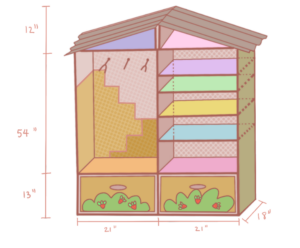
Figure 12: Sketch of“Home”-Inspired Tool Shed
Of the three designs, this one is the least technically challenging, and therefore might be the easiest to implement. It is similar in concept to existing tool storage and shelving that is on the market. This gives a solid ground for community involvement in the project. Since the technical barrier to assembly is low, instructions could be written and materials provided to help community members paint and put together the tool shed. This design maximizes the customizability of the project design/final aesthetic and would involve several hours of the LaFarm community coming together to make it work.
Design 3: Revolving Tool Organizer
This design would involve a clear or translucent housing with oval-shaped metal tracks on which racks can move (Figure 13). Some racks contain larger hooks for shovels while others have peg boards cut into organic shapes. Two of the racks would contain space for glove buckets.
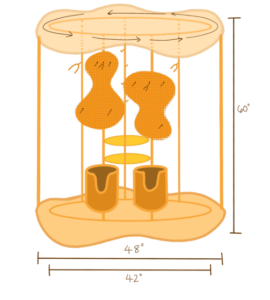
Figure 13: Sketch of Revolving Tool Organizer
This would be the most challenging of the three designs to create and assemble properly. Due to this, there would be less opportunity for the LaFarm community to construct the installation. However, stakeholders would be involved in the many design choices needed to realize this option. Things like color, exact shapes, and layout would be determined by stakeholders and polished by student artists. In this way, stakeholders would be involved in the concept and planning process, but less so in the construction process.
Design 4: Parametric Shelves
This design, mounted to a wooden rack and located just outside the greenhouse, features parametric shelves. This type of shelving creates organic-looking storage solutions that feel fitting for a community garden setting. Backed with a pegboard, the design has four movable shelves, hooks, and built-in storage for clean and dirty gloves (Figure 14).
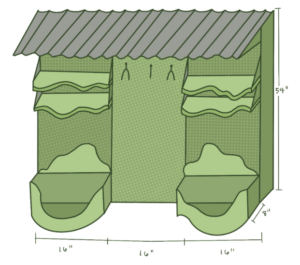
Figure 14: Sketch of Parametric Shelving
This design requires some knowledge of CAD software but otherwise is not very difficult to design. Materials and machine equipment could all be sourced from the Engineering Division. Student artists would be crucial in deciding which equations to use to determine the shape of the shelving, determining the best size, and organizing the spacing. As for community involvement, stakeholders and LaFarm community members would be painting and assembling the shelving as a community activity along with the organizing group of students.