Interview: Professor Wayne Leibel
Leave a reply
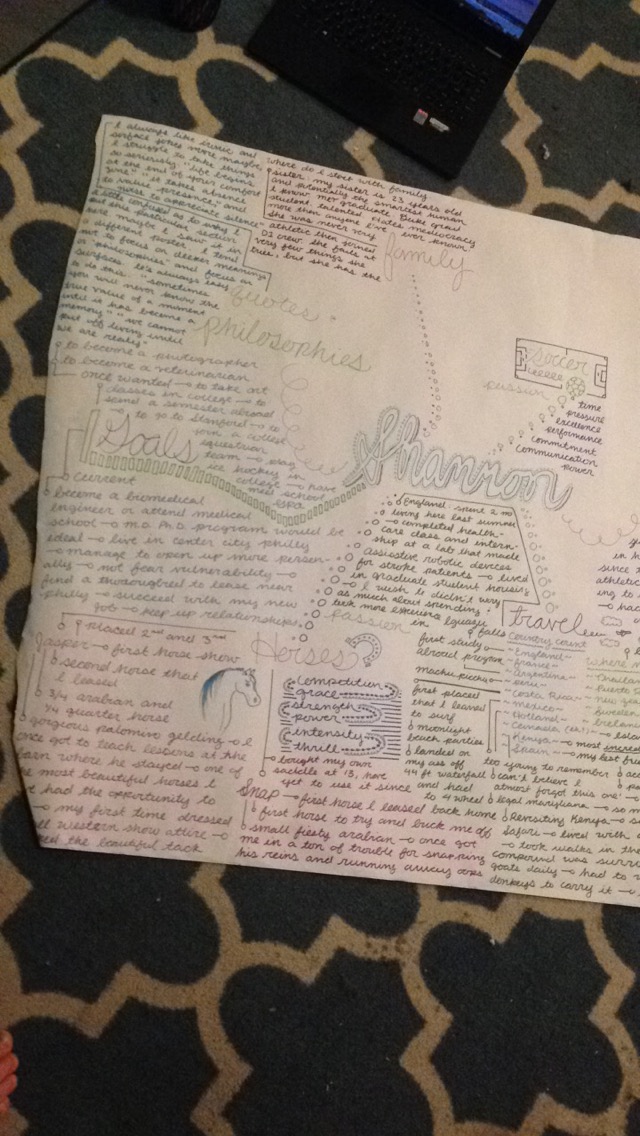
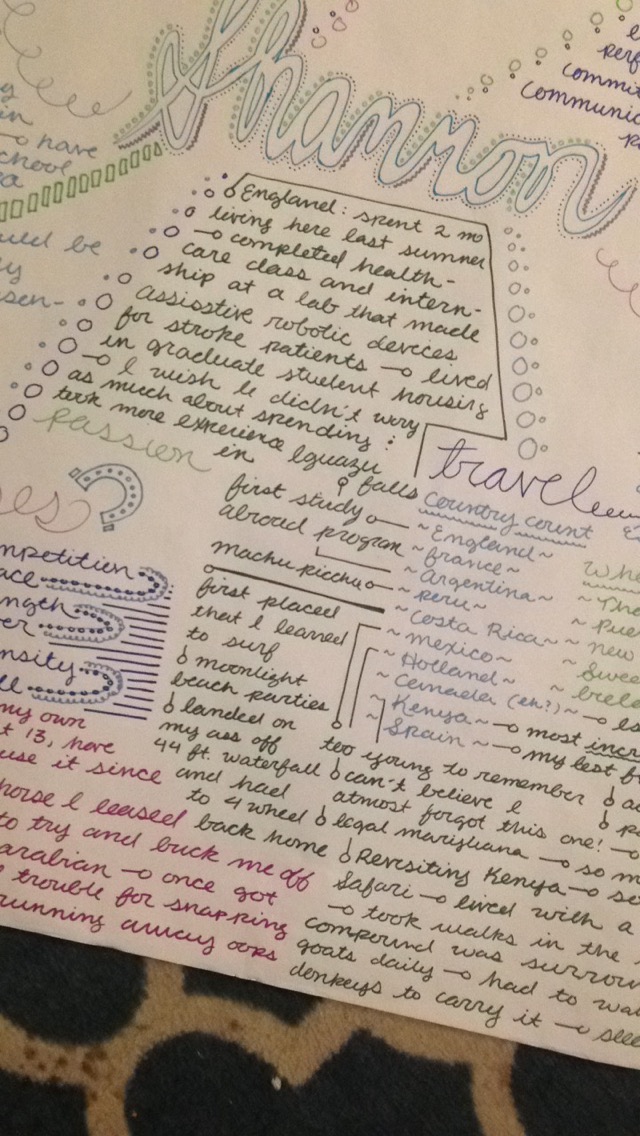
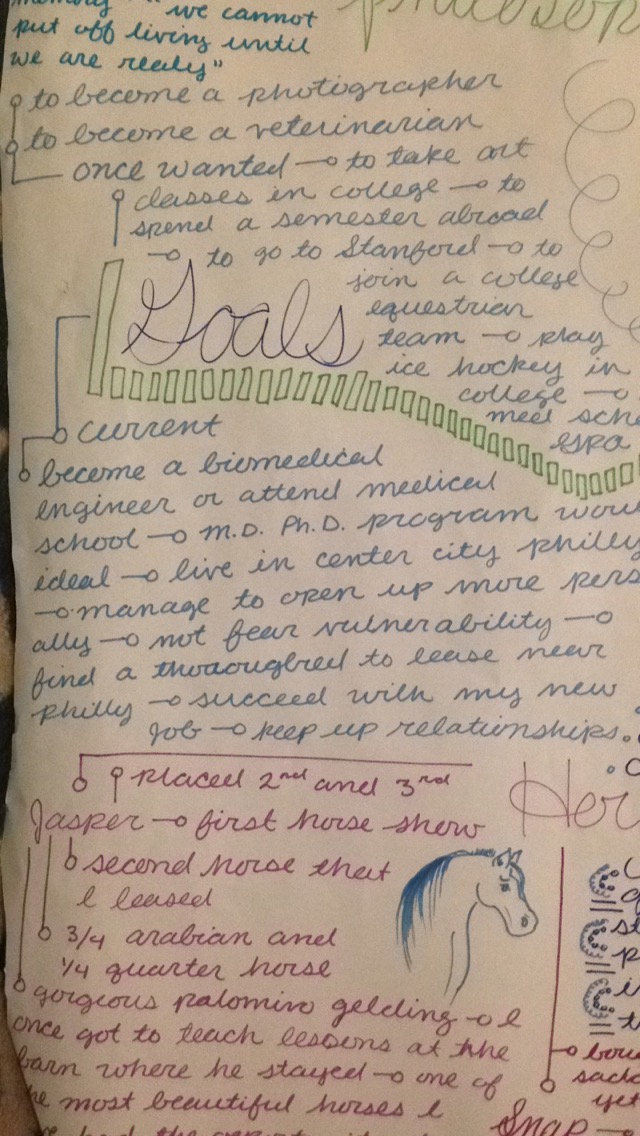
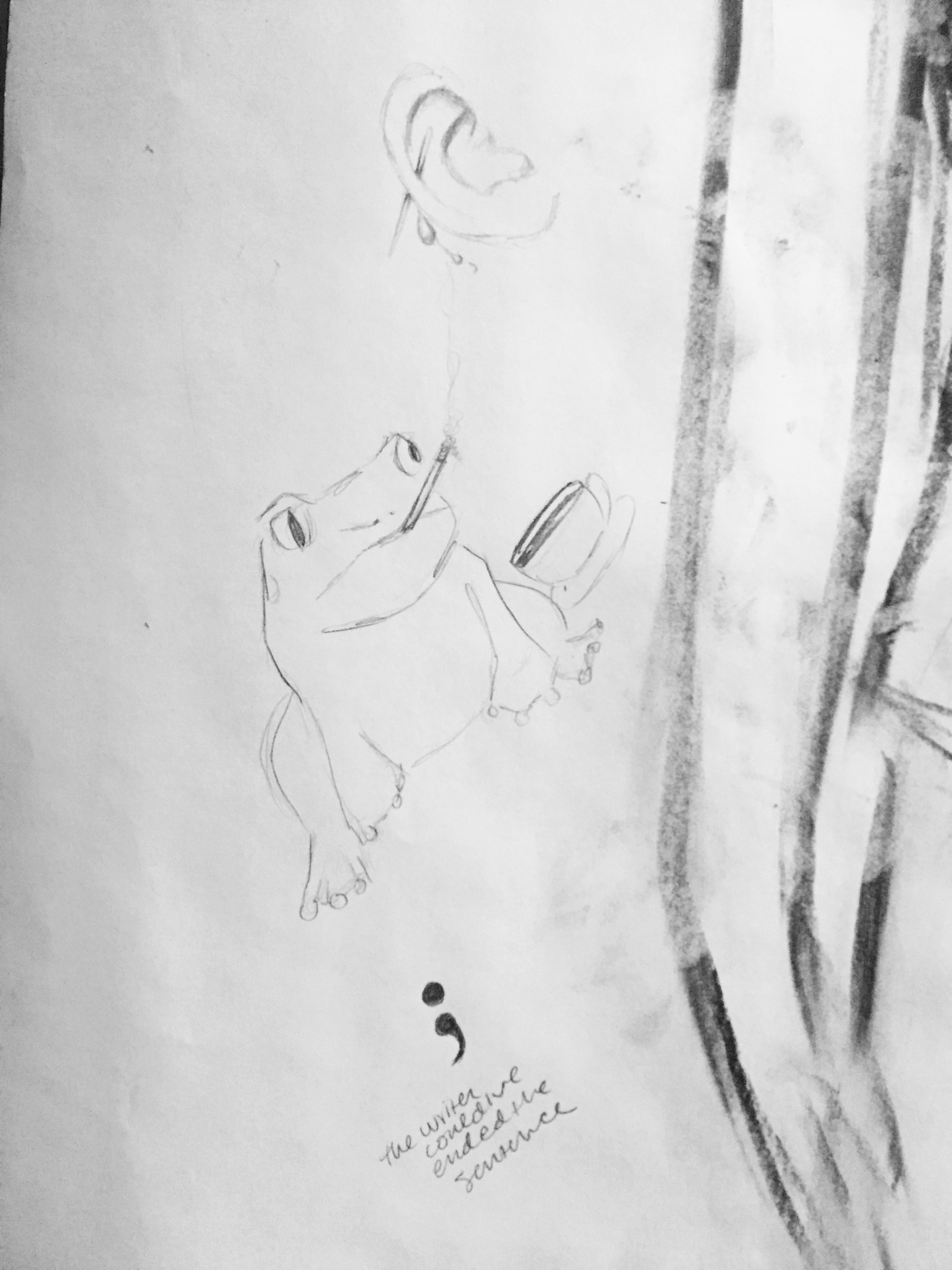
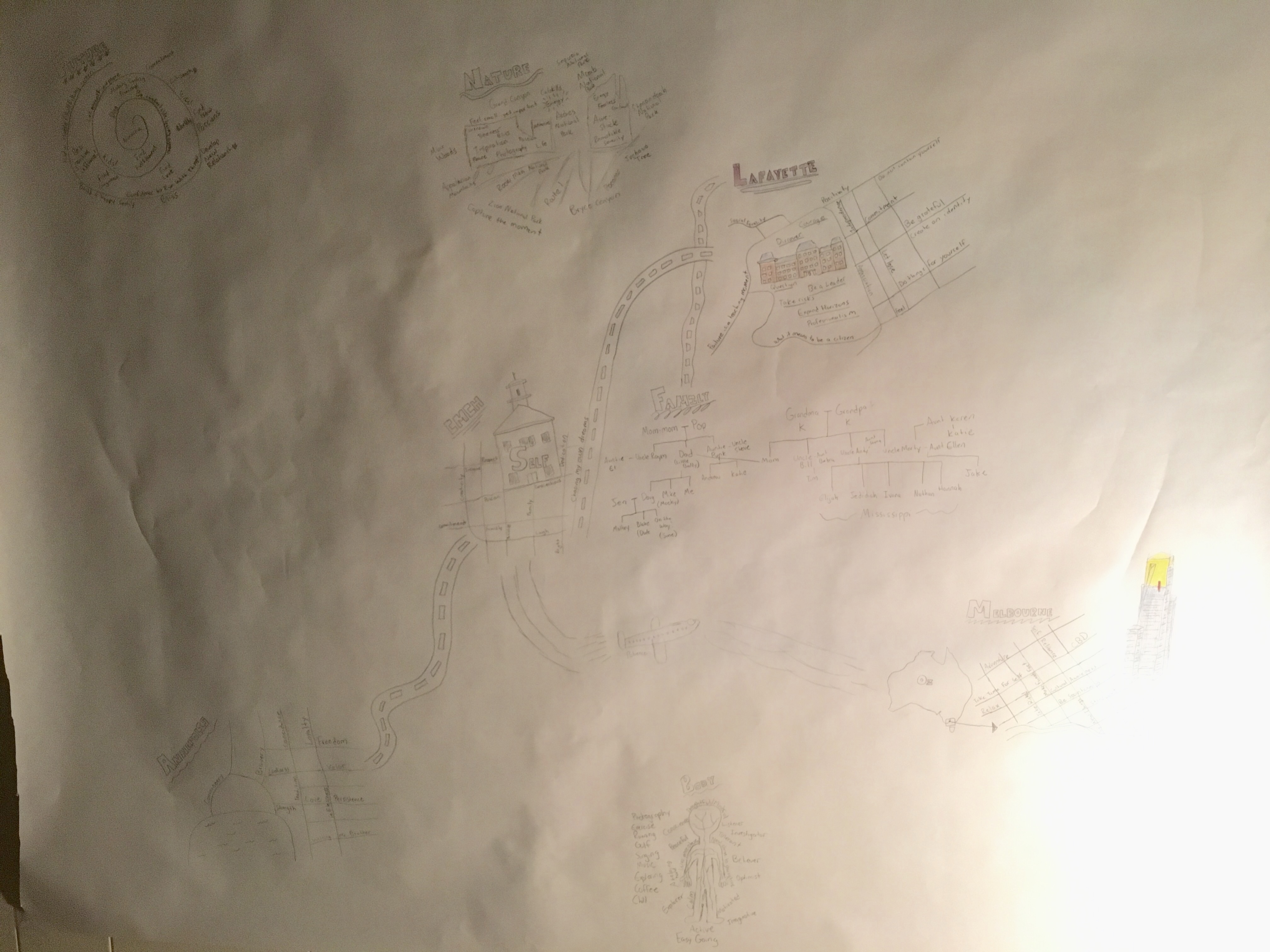
Added some events portrayed through images, as per suggestion from last class. The ear was from my roommate, our honorary roommate and myself all getting our cartilages pierced recently, and how (surprisingly) drastically different all the experiences were. The smoking frog with a cup of coffee was from a story of the tattoo/piercing artist’s of a stick and poke he gave a friend during hurricane sandy (very interesting guy… we were there for like four hours). And lastly, the semi-colon project is a suicide awareness and prevention symbol. Also, reallyyyyy messed up the charcoal from my self portrait arm… oops.
Where were you born – was it close to a major city? What does this place mean to you?
new jersey summit close to NYC grew up in mattisdon NJ
on a train line into NY
go to other towns and into the city
level of freedom that most kids don’t have
What was your childhood like?
youngest child by a long shot
lot of freedom
positive
When did your passion for X develop?
started abilities (if you want to call them that) at 11
Were your parents active in your pursuit of education/activities? Did they support you pursuing your passion professionally as a career?
mother was a sunday painter
oil paint in the house
father was reluctantly supportive but lovingly supportive nonetheless
mom passed away at 17
Did you have a mentor? If so, what did you learn from him/her?
late mentor.. maybe a few
one in high school
one out of college/profs
mentor/friend/connections/access
stephen antonakos
brent saville (first)
(both deceased now)
What was the moral authority when you were growing up? [religion]
not religious
Did you find you compared yourself to other people your age when you were just starting out? Is your field now competitive?
never looked at work in a competitive way
private high school (business oriented)
competitive now (marketing yourself)
Did/do your parents do something related to your craft?
father was a business man
Did you have a good relationship with your parents/family?
good relationships all around
support outside of family
father of a girlfriend high school into college
introduced to employer and studio assistant
Practice
What emotions do you associate with your practice?
intellectual: making work about nature there is the love of it and the deference and respect for it (and sorrow in acknowledging its destruction)
creative: get into the zone and time goes away and live in the moment and creating and being subjected to outside powers and there aren’t many experiences outside that
Why this specific domain in the field?
why create art about nature? need to be in nature often. demanded presence in the field (pun intended).
versus being a historian… i am a maker
When did you find things came naturally to you? Do you have a workflow that allows you to work without thinking about minutiae and details?
being out in a field in a collecting mode.. certain level of awareness that is very meditative and withdrawn observation.. no hardwork
in studio making a piece.. physicality is demanding in a different way that forces you to be analytical
restricted medium.. pure immediate response (push-pin pieces)
What is the greatest difficulty you have faced over the course of your career?
constantly questioning yourself
finding the fortitude to continue to make work
persistant
every artist has a pitfall
Were there any costs/sacrifices to pursuing your passion? What were those?
decided not to have children but had some anyways (not hers biologically) his wife already had two young children
Expertise
What qualities do you associate with mastery? What about in your field? How do you compare against those criteria?
knowledge (broad and deep knowledge of your field)
knowledge, awareness, experience (historical, technically trying to achieve and the ability to execute it, awareness of others in the field who have better knowledge than you do, the ability to work with other to achieve a goal)
meet some and fall short of some
How long have you been working in your field?
exhibiting right after college 1986
manhattan at 25, 29 years ago
What was the evolution/changes in your practice?
work in stages and themes
moved from college using a lot of found objects, because of their history
interest in nature and its structure
flat work v sculpture
still goes back and forth
Are there any limitations in your field? How do you get around them?
he’ll let us know when he gets around them
kind of like hollywood
the more big and powerful people you know the greater access you have
many gate keepers
many artists don’t get the recognition they deserve
When did you experience a breakthrough moment? What is your next step?
haven’t come from studio moment rather than introduced by an idea by a scientist or philosopher… who posed a question or approached an idea in a very novel way. more intellectual discussions.
Motivation
What motivates you to keep practicing?
it’s way of life. first out of college back at home, no studio, pretty depressed looking for a job… wasn’t making art (4-5 months) really needed to make art. that keeps him happy and satisfied. nurture the soul. can’t not do it.
Do you have any regrets?
very few, not to do with art career.
see below.
Presently
Do you mentor others? What have you learned from being a mentor?
Professor so, fairly hands off mentor. one of his regrets is that he’s not a forceful mentor or friend… let them do their thing.
Do you collaborate with younger practitioners?
surrounded by them. high school program too. creating opportunity with collar (with professional artists too)
Which project of yours is your favorite?
like asking favorite child
piece collaborative project Heinz project (57 artist) 7 different objects and each one had an itinerary of artists it would go to (schedule) a week to manipulate the piece (painting, sculpture, video) photograph it beginning middle and end and send it along. around 1989. everything was mailed and digital photography wasn’t around (sent rolls of film etc). lack of control and surprise.
petri project (2000 artists) all these dishes that cascade down in a circle from above onto the floor, ongoing
Which project of yours do others consider your best?
spore drawings (PBS documentary)
What is your favorite part about what you do? Least favorite?
freedom of doing what you want to do and creating, sometimes an audience and a place to show work (very privileged not taken for granted)
least fave is that the creative process has its costs (asking for money, having to make money)
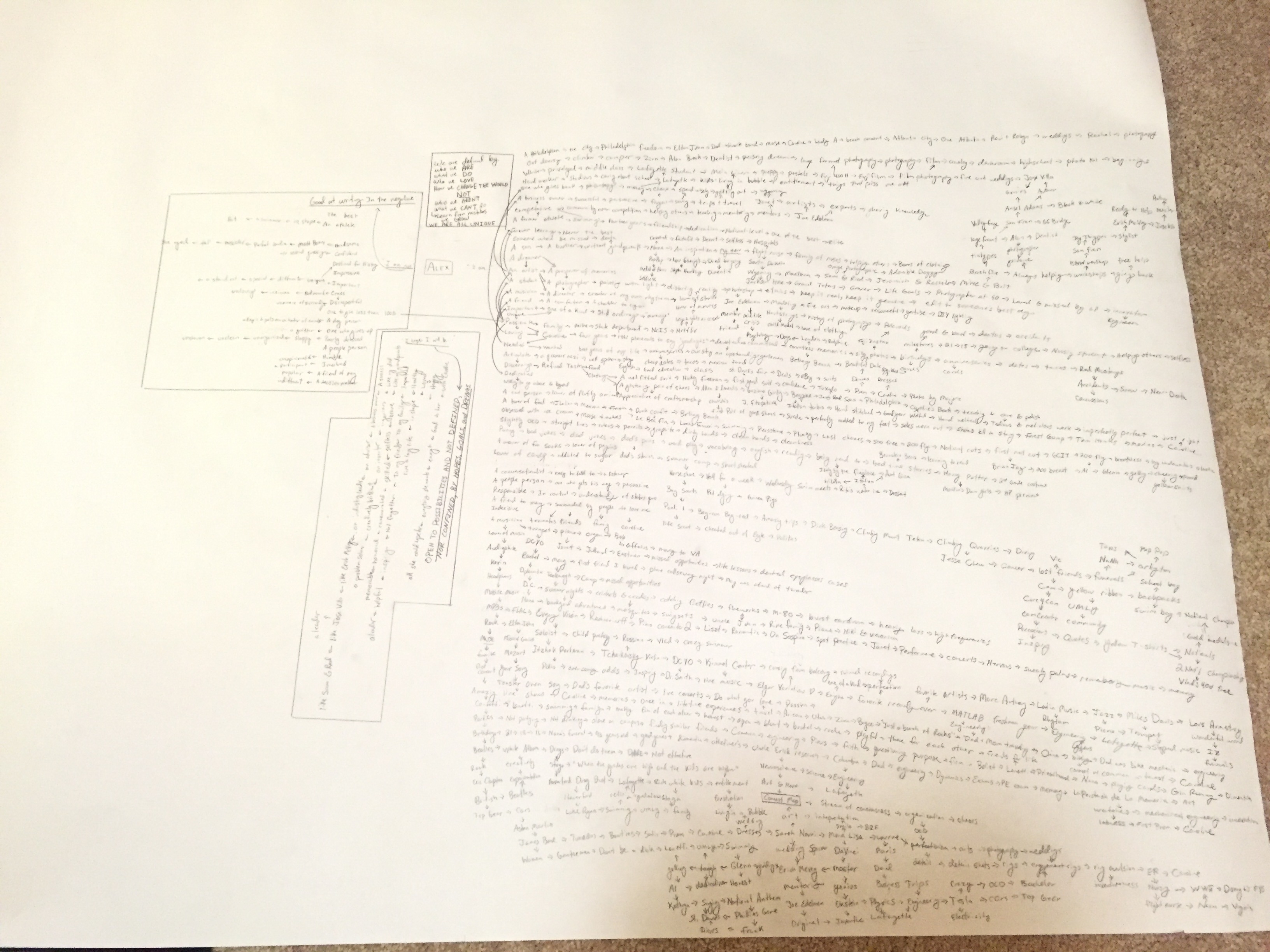
I actually forgot to take pictures during interview, but I do have two responses from Mrs. Fisher that I really want to share. Neither of these two responses were recorded by the audio copy but I feel like they were even more important.
For the difficulty/sacrifice question, Mrs. Fisher found it was really hard to organize her language during the interview and felt more comfortable to answer after the interview when I turn off the audio recorder. I tried my best to summary her response.
What is the greatest difficulty you have faced over the course of your career?What was the sacrifices you made?
Mrs. Fisher used to be a full time professor in a university, which she enjoyed a lot. As her personal life changed, she could not work as a full time professor anymore and kept being a part-time professor till now. However, she refused to call it a sacrifice nor to be regret for this decision. For her, this decision was a shift of her career, a shift of her life.
When I finished the interview and was about to live, I expressed my admiration of Mrs. Fisher’s pursuit of her career. What she responded to me was even more important than what I got during the interview. She said, piano was not a talent or expertise she had, but a lifelong passion that was born inside her. She believed if there was only one take-home information I could have from EC interview, it should be that for each master of each field, the lifelong passion of his or her expertise is the only thing that keeps him or her going this far.
A few of our ideas for the Infographic
First: Her professional photograph that she chose
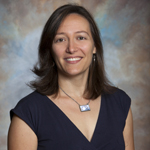
Jennifer Talarico Psychology
Next: Graphs of her most significant/favorite research:
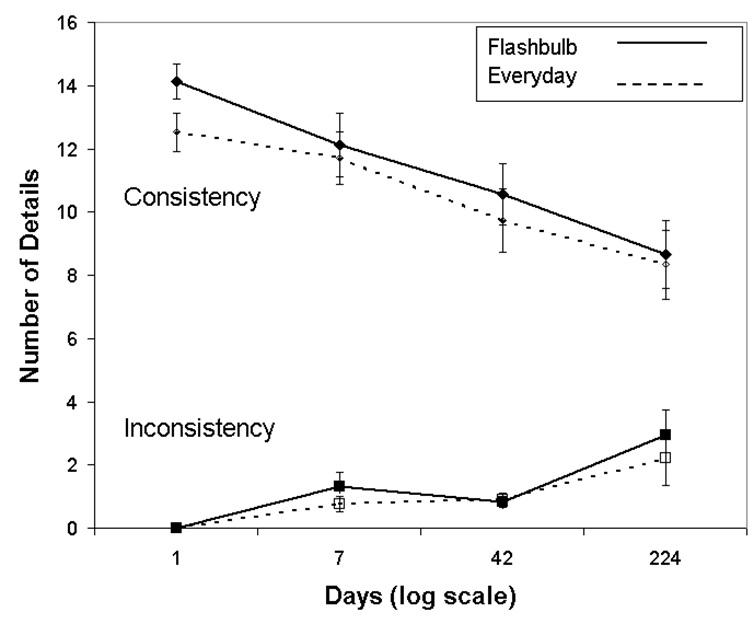
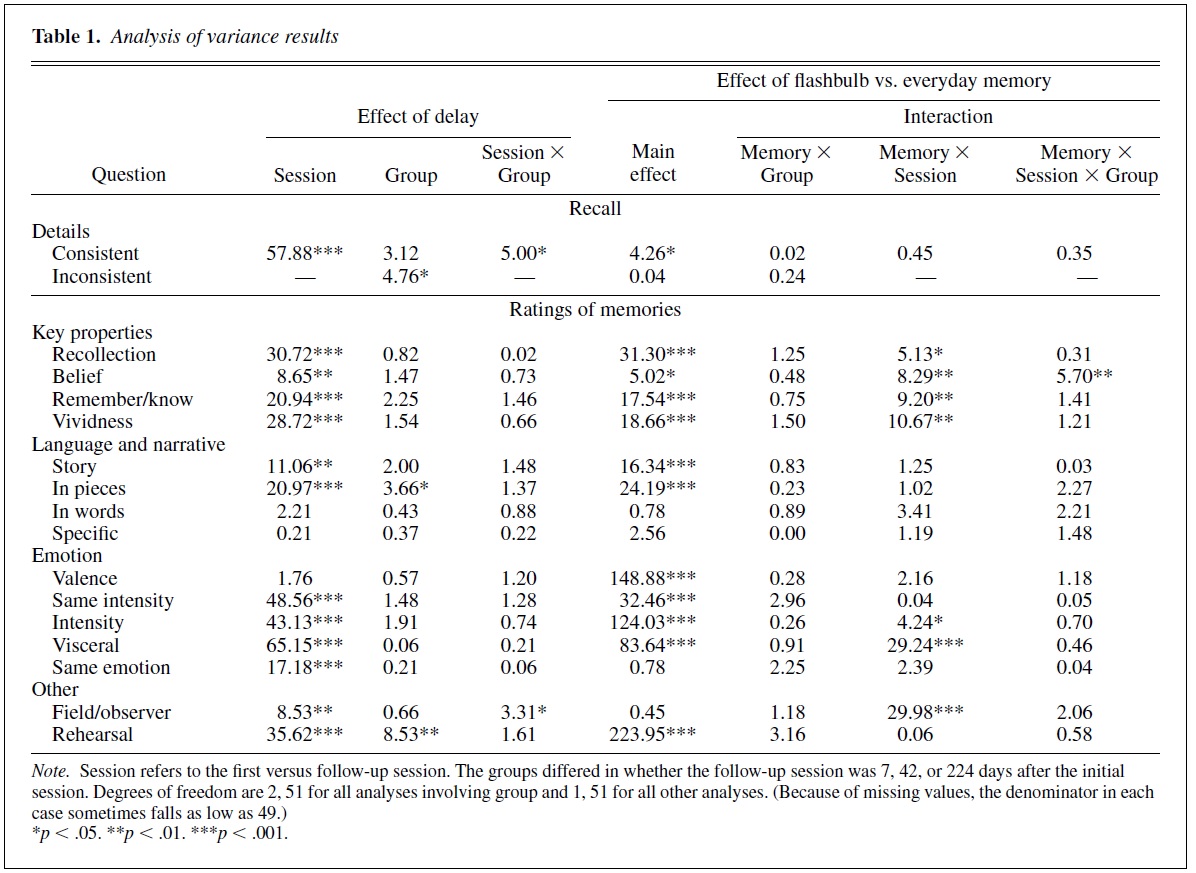
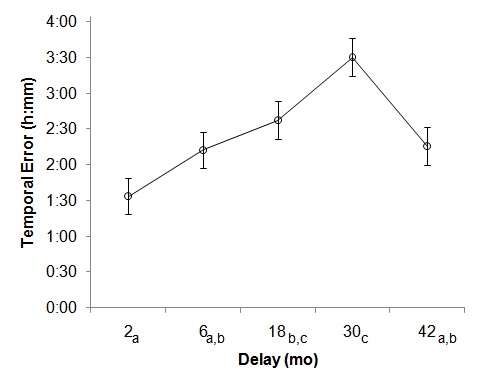
And Lastly: In order to tie it all together, the actual images that she has used within her memory research in the past.
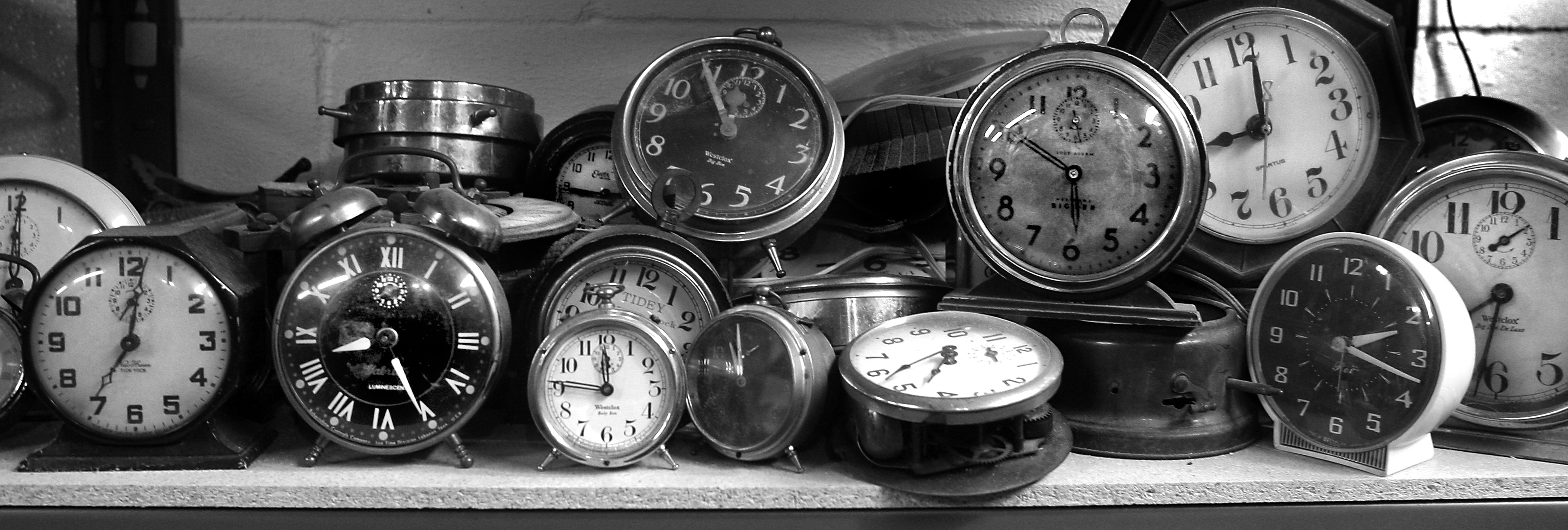
A shelf full of alarm clocks and electric clocks in Ed Bikowitz’s work shop in the basement of his Grand Rapids home.
(Jon M Brouwer | The Grand Rapids Press)
http://library.rice.edu/services/dmc/guides/graphics/poster-ppt
http://undergraduateresearch.as.ua.edu/presenting-your-work/making-posters/
Here are are some links for power point posters!