Introduction and Methods
This analysis explores how Punjabi and South Asian communities talk about identity, language, heritage, and belonging in their own words. Rather than relying on formal interviews or surveys, it draws on Reddit, a large public discussion platform where users post candidly and often anonymously. Anonymity tends to encourage more honest, unfiltered reflection, which makes Reddit a valuable space for studying how people negotiate questions of homeland, migration, and cultural memory across the India–Pakistan border and throughout the global diaspora.
To carry out the analysis, posts and comments were gathered from threads connected to five recurring themes that surfaced repeatedly in conversations about Punjab and diaspora life: diaspora experience, Lahore and regional heritage, language, the memory of Partition, and shared or contested identity. The collected text for each theme was cleaned to remove punctuation, web links, and extremely common “stop words” (such as the, and, or is) that carry little meaning. The remaining words were then counted by frequency.
Each theme is represented below as a word cloud. In a word cloud, the size of a word reflects how often it appeared in the discussion: the larger the word, the more central it was to that conversation. Word clouds do not capture tone, sarcasm, or context on their own, so each visualization is paired with a short interpretation of what its most prominent terms suggest. Read together, the five word clouds offer a snapshot of the vocabulary communities use when they describe who they are and where they come from.
1. The Diaspora Experience
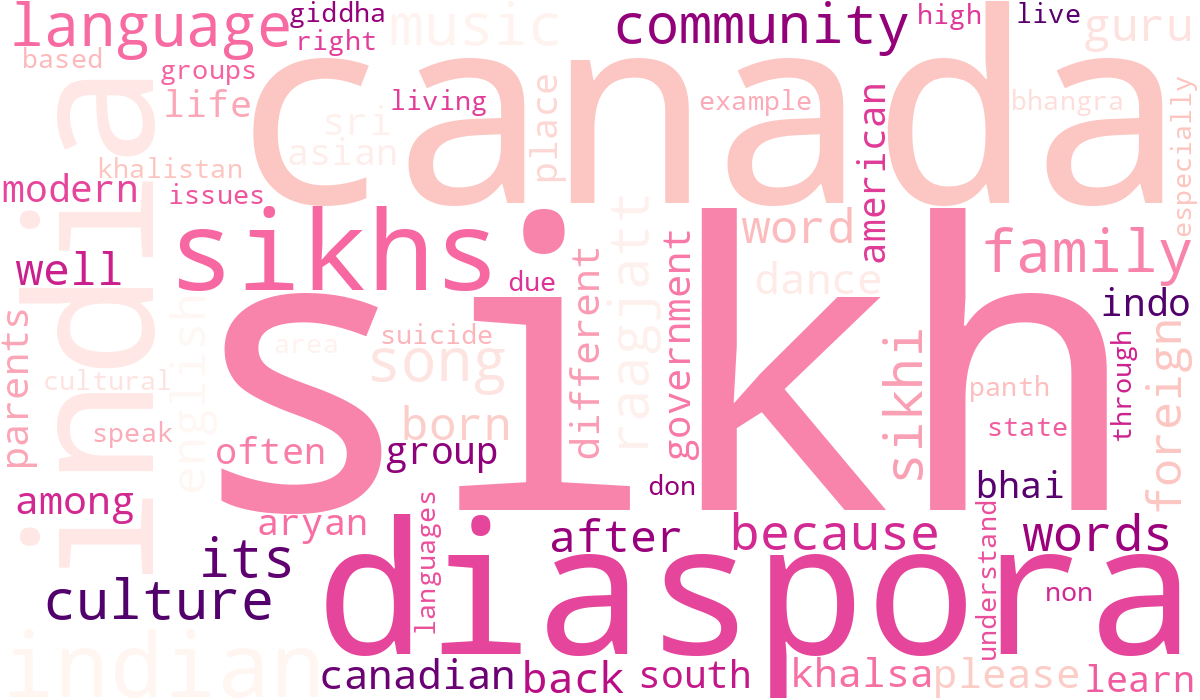
Significance: This word cloud captures how members of the diaspora describe life away from the homeland. The dominance of Sikh, Canada, and community, alongside terms such as family, culture, bhangra, giddha, khalsa, and khalistan, shows that diaspora identity is anchored simultaneously in religious belonging, a specific host country, and cultural practice. The prominence of Canada in particular reflects the size and visibility of the Punjabi Sikh community there.
Outcome: The conversation suggests that, for many in the diaspora, identity is preserved less through the nation-state of origin and more through faith, language, and cultural expression carried abroad. Words like parents, born, and indo point to a generational dimension, where second-generation members negotiate inherited identity within a new national context rather than abandoning it.
2. Lahore and Regional Heritage
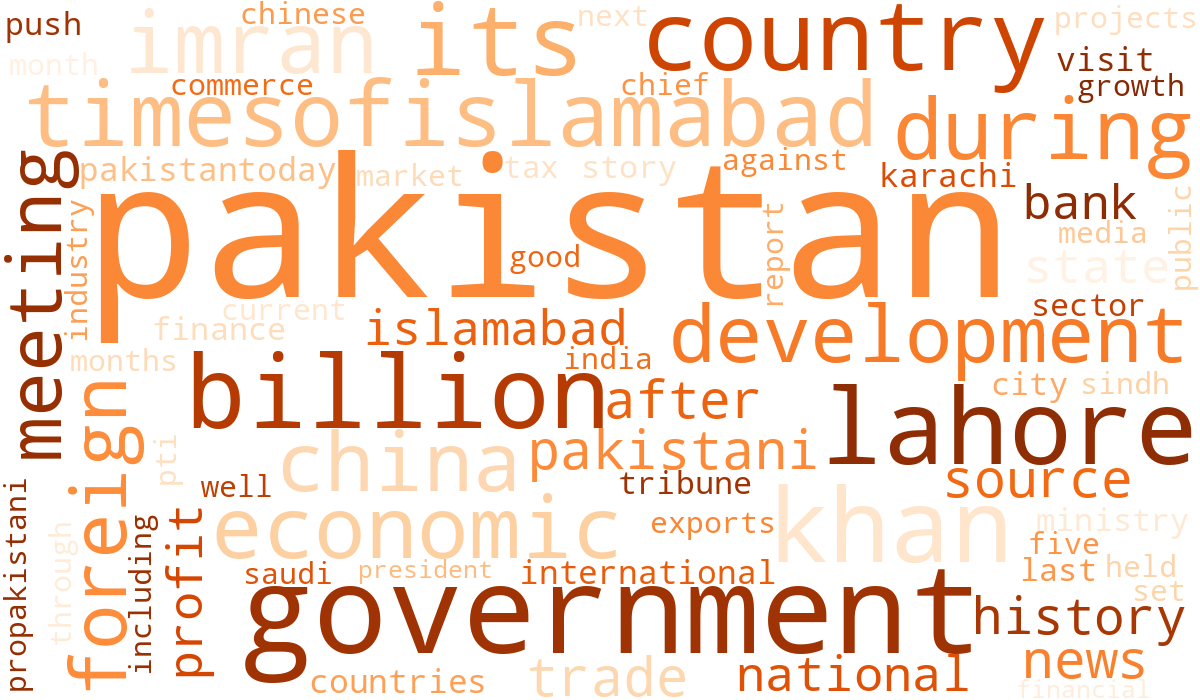
Significance: While framed around heritage, this discussion is dominated by Pakistan, government, development, economic, billion, and China, with Lahore, Islamabad, and Karachi anchoring it geographically. This reveals that conversations about regional places quickly become entangled with present-day politics, economics, and national news rather than nostalgia alone.
Outcome: Heritage here is discussed through the lens of the contemporary nation: its economy, governance, and international relationships. This indicates that for many users, the meaning of a place like Lahore is inseparable from current Pakistani national identity and its trajectory, rather than being treated purely as a site of historical or cultural memory.
3. Language
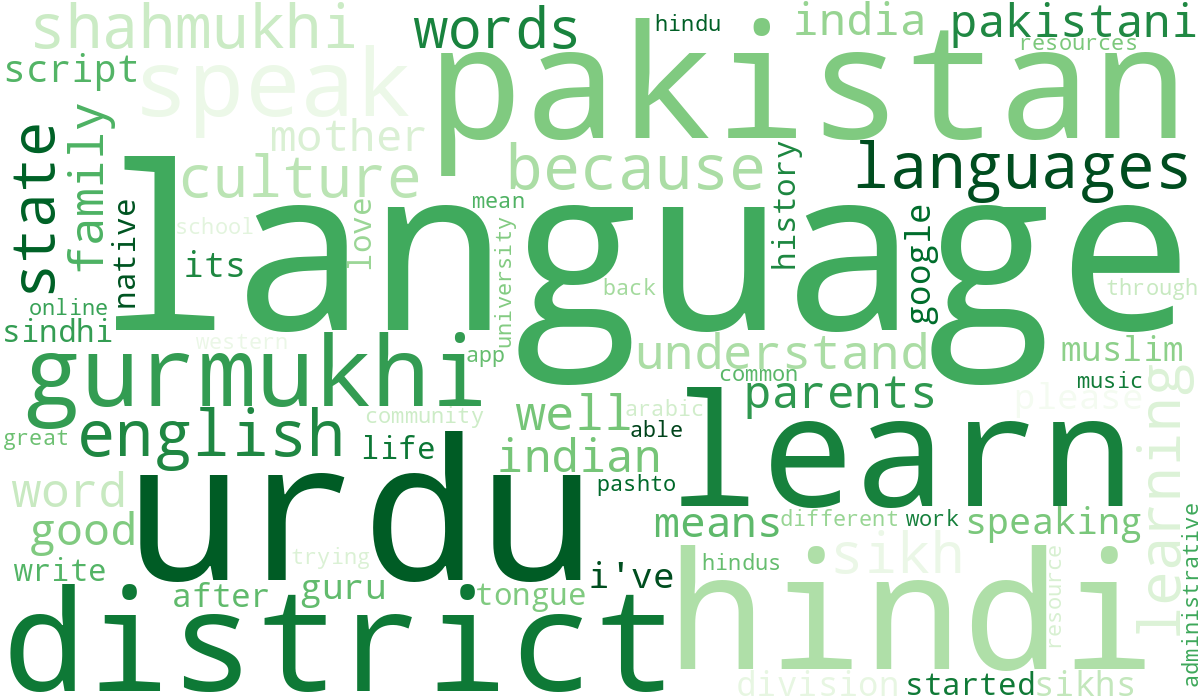
Significance: Language emerges as one of the most emotionally charged themes. The cloud is led by language, Urdu, learn, and Hindi, but the presence of Gurmukhi and Shahmukhi, the two scripts used to write Punjabi, is especially telling, along with mother tongue, native, parents, and speak.
Outcome: The vocabulary points to language as a central battleground for identity and transmission across generations. The coexistence of Gurmukhi and Shahmukhi reflects how Punjabi is divided by the same border that divided the region, while terms like learn and parents highlight active concern about preserving and passing on a heritage language that many feel is at risk of being lost.
4. The Memory of Partition
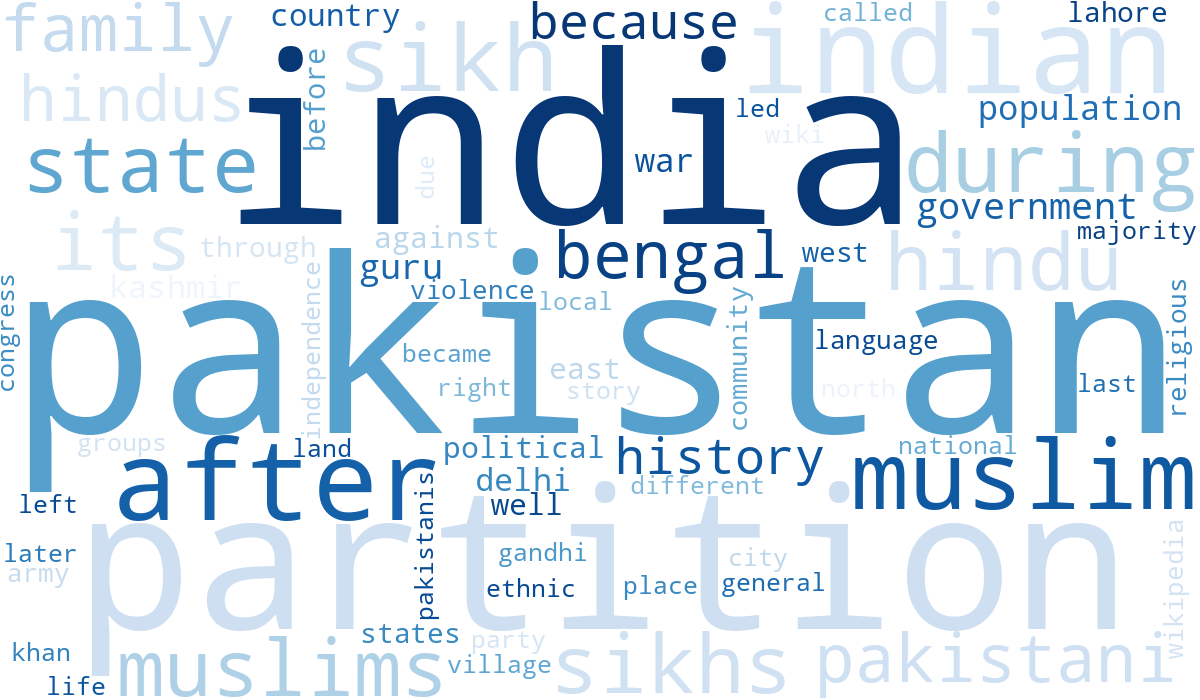
Significance: This theme reaches furthest into history. Dominant terms include India, Pakistan, Partition, Muslim, Hindu, Sikhs, Bengal, violence, and independence, with figures and places such as Gandhi, Delhi, and Kashmir appearing throughout.
Outcome: The clustering of national, religious, and communal terms shows that the memory of 1947 is still framed largely in terms of religious demographics and political division. The presence of violence and Bengal alongside Punjab-related terms suggests users understand Partition as a shared, traumatic, and ongoing reference point rather than a closed historical event, one that continues to shape how the two communities define themselves against each other.
5. Shared and Contested Identity
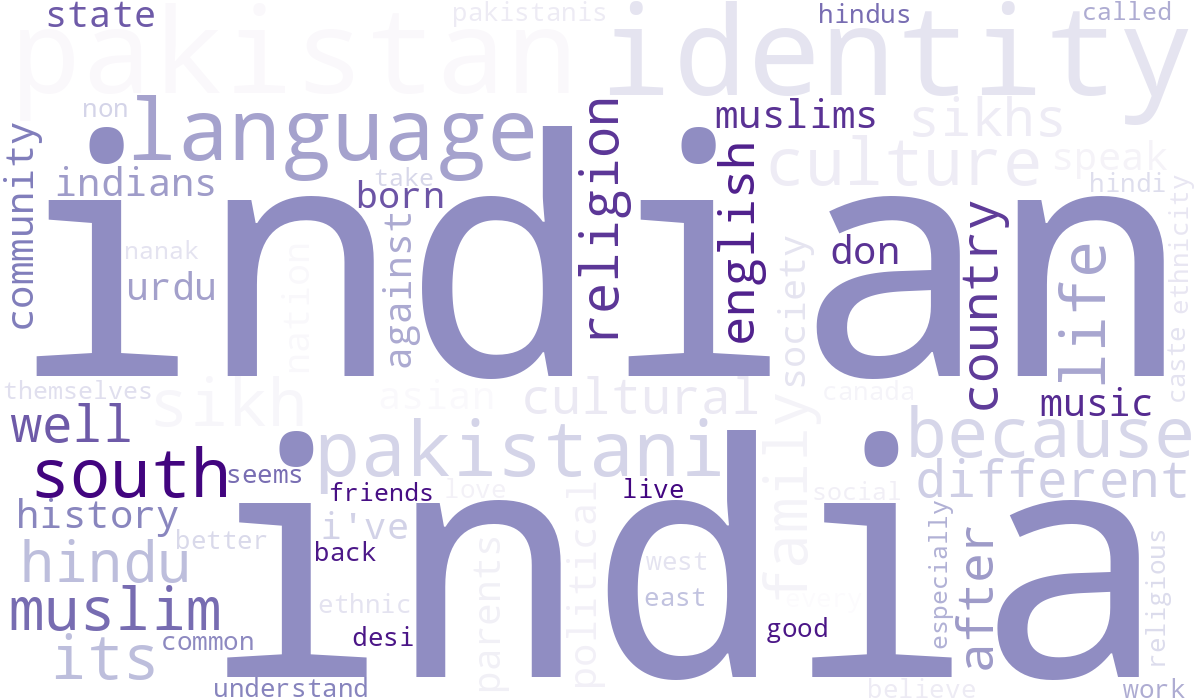
Significance: The final theme brings the others together. Here Indian, India, and identity dominate, surrounded by Pakistani, language, religion, culture, Muslims, Sikhs, Hindu, desi, caste, and ethnicity. The word identity itself appearing prominently signals that users are explicitly reflecting on the concept, not just living it.
Outcome: This cloud reveals identity as both shared and contested. Common cultural markers such as language, religion, and the umbrella term desi bind communities together, yet the parallel prominence of distinct national and religious labels shows that belonging is continually negotiated. The result is a picture of an identity that is layered and overlapping rather than singular, defined as much by what is shared across the border as by what divides it.
Conclusion
Taken together, the five word clouds trace a consistent thread: for Punjabi and South Asian communities online, identity is built at the intersection of faith, language, place, and historical memory. Diaspora conversations emphasize community and cultural continuity abroad; regional discussions tie heritage to the contemporary nation; language threads reveal anxiety about preservation; Partition remains a defining and painful reference point; and reflections on identity itself show a sense of self that is plural and negotiated. By listening to these communities in their own words, this Reddit-based analysis offers an unfiltered view of how memory and identity are carried across the border and across generations.