In developing lesson plans for middle school students for outreach programs, we have focused on the overarching question of “What is Technology?”. We have been able to test our ‘solution’ with students in Easton Area Middle School at their weekly LafKid Connect session. Criteria for technologies or sociotechnical systems were 1) easy for students to understand, 2) demonstrates underlying social, political, or economic contexts, 3) Fun.
Solution 1 – Who, What, and Where of Breakfast Cereal
One sociotechnical system that met our criteria was children’s food, especially packaged and processed food. We chose breakfast cereals because of their widespread presence in American homes. National surveys in the United States confirm that most frequently consumed foods at breakfast are cereals (Hoy et al 2024).
| Time Duration | Activity |
| 2 min | – Introduce mentors
– Explain the Engineering Studies program |
| 3 min | – Where is food made? Who or what makes it? |
| 3 min | – Introduce James Caleb Jackson, John Harvey Kellogg, and important figures in industrial food revolutions |
| 5 min | – Exploring popular terms: how do you define “organic”? “Artificial?” “Sustainable?” “Healthy?” “Technology?”
– Why is it important to know (and decide) their meanings? Who decides them? – What is a sociotechnical system? |
| 15 min | – Divide into farmer group, truck driver group, scientists group, packagers, and retail group – start from the top and demonstrate real-life considerations of the supply chain of the cereal |
| 5 min | – Genetically Modified Foods, fertilizers, high-yielding varieties |
| 10 min | – Introduce Professor Benjamin Cohen’s work in Food Studies. Discuss experience as students of a sociotechnical engineering program and as a College in general.
– Reflection and reiteration of concepts |
Table 2: LafKid Connect Lesson Plan, as created by authors
The lesson plan on cereal has several strengths. The relevance of food as a topic is accessible and relatable to middle school students. The lesson plan provides a holistic and interdisciplinary understanding of the historical, cultural, and technical aspects of food production. The introduction of food studies by Professor Benjamin Cohen offers a unique opportunity for students to gain insights into the study of sociotechnical systems through academia. It might also inspire students who are interested in food studies to come work with Professor Cohen at Lafayette College.
However, the lesson plan also presented several drawbacks. The complexity of the topic risked being too advanced for middle school students to fully grasp within the limited timeframe of a one-hour lesson. While the supply chain activity role play could be interactive, much of the lesson relied on lecture-style discussions for example the industrial food revolution and definition of terms. This could potentially lead to disengagement among the middle school students as they do not like being talked at. Ultimately, this lesson plan was not chosen because of its complexity and the limited hands-on engagement needed to capture their attention.
Solution 2 – What is Technological About a Toilet?
We found the sociotechnical systems around sanitation and waste management to be particularly extensive, of great depth, and relevant. This is based on the longstanding global challenge of sanitation and sanitation-related diseases as well as daily life which involves the usage of some form of toilet. We hoped to initiate conversations that expand the idea of technology. Through the discussion of sanitation and wastewater management systems, we can introduce well-established concepts in STS as well as nuances, such as “what is a norm?”, “what is a design decision?” and “who are the participants in a technology?”.
| Time Duration | Activity |
| 2 min | – Introduce mentors
– Explain the Engineering Studies program |
| 4 min | – Defining technology by providing examples
– Is the toilet a technology? Why or why not? |
| 3 min | – Discuss basic human needs for hygiene and relate them to rights like sanitation and building codes. |
| 5 min | – History of toilets. Present pictures of toilets from ancient to modern designs, discussing the historical context. |
| 15 min | – Break students into small groups to brainstorm and design a toilet.
Consider
|
| 5 min | – Sociotechnical definition
– Use toilets as an example to explain how they reflect societal norms, values, and needs |
| 10 min | – Reiteration of concepts and reflection
– Groups present their designs and provide constructive feedback to each other – Reinforce sociotechnical framework |
Table 3: LafKid Connect Lesson Plan, as created by authors
As a team, we discussed several benefits of implementing a lesson about how toilets are considered a technology. Furthermore, the design process of the lesson plan started with a brainstorming of different topics we could discuss in our lesson plan that connected to various aspects of the socio-technical system. For instance, as shown in Figure 7, the contributing factors of toilet systems range from materials to norms and customs, each holding a significant role in the system’s design, production, and usage. Additionally, we assigned each of the following topics to a specific category; social (S), political (P), technical (T), and economical (E). This revealed to us how much of a benefit it would be to utilize this lesson plan, as many topics created an opportunity to connect and explain technology as a complex and interdisciplinary system.
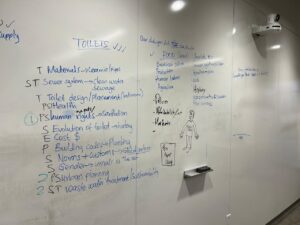
Figure 7: Decision-making process
Another strength of teaching this lesson plan was being able to incorporate an activity that not only engaged the students but also showcased the students’ understanding of the technical content that we taught. In the realm of engagement, the topic of toilets was heavily relatable to middle school students. We chose a type of technology that is commonly used but also unconventional and interesting enough to grab students’ attention. This was a major strength of the plan because the students entered the lesson with little prior knowledge about toilets being a form of technology, and began recognizing its presence in society as a sociotechnical system.
LafKid Connect Lesson on November 12, 2024
We volunteered to teach in an exploration class which took place on November 12, 2024 with the Easton Area Middle School students during their after-school program with LafKid Connect. The lesson aimed to teach the students about sociotechnical systems through the lens of toilets. Students were engaged and curious as we (facilitators) introduced ourselves and explained the Engineering Studies programs and their relevance to society.
Students were asked to define technology, and as mentioned in the Introduction, they did so using examples like light bulbs, chairs, TikTok, phones, and chairs. This is an example of closure, which restricts ‘interpretative flexibility’ (Norton 2008, 5-6). The students’ examples reflect a limited view of technology as “things” rather than including abstract aspects like techniques, systems, or the interplay between humans and technology The phenomenon of closure also calls for diverse perspectives in Engineering, which would open up new possibilities for solutions to broader sociotechnical challenges. A lively discussion followed the question, with students debating whether toilets qualify as technology. Some students connected toilets to engineering while others argued it as just another basic item. Facilitators guided students to connect their ideas to societal needs.
One of the facilitators asked the question, “Who has used a toilet before?” and students shared personal experiences and the facilitators transitioned to discussing hygiene and sanitation as basic human needs and rights. Afterward, historical photographs of toilets were shared, showing their evolution from ancient times to modern systems and from different parts of the world. Students were fascinated by the older designs and played a game to try and place the geographical background of the toilets.
Facilitators then asked students, “What features does a toilet need?”. Students worked in groups of four to brainstorm and design toilets with essential features such as seating options, flushing mechanisms, and comfort. They began sculpting the basic features with Play-Doh. Facilitators explained the importance of cost and materials, highlighting that sometimes the different types of materials need to be outsourced. Students integrated sewer connections and waste management features. Many models included mock pipes and compost bins made of Play-Doh, demonstrating a focus on hygiene and environmental considerations. Students were then guided to think about how their designs made sure to prevent diseases such as cholera and typhoid.
Through the activity, we aimed to expand design constraints (Lucena 2024). As the activity progressed, students were prompted to reflect on how designing a toilet goes beyond technical aspects. They highlighted the importance of human involvement in the process and most models included humans made out of play doh. The following are some of the creations:
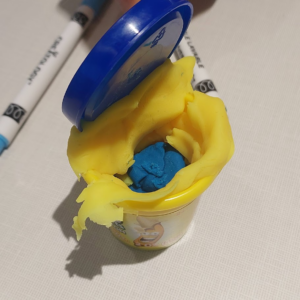
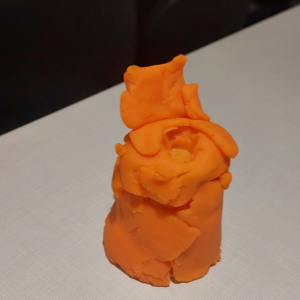
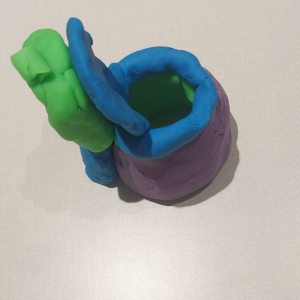
Figure 2: The images of the initial designs of the toilets
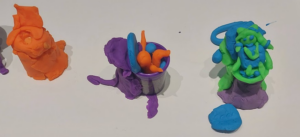
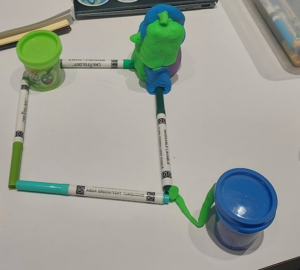
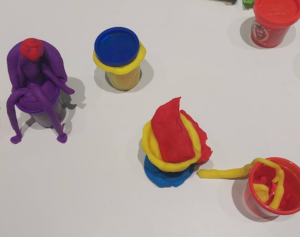
Figures 3, 4, and 5 (clockwise): The images of the final designs of the toilets
After the students finished designing and were satisfied with the outcome, facilitators introduced the concept of sociotechnical systems and explained how toilets integrate societal needs and values. Students were given a chance to relate this concept to their designs and define the term “sociotechnical” to the rest of the class. Groups presented their toilet designs, receiving feedback on creativity, practicality, and alignment with human needs.
Reflection on the Lesson with Easton Area Middle School Students
The following are key lessons from our initial lesson with LafKid Connect mentees:
- Popular culture and mainstream dialogue of technology do instill a defined and narrow perception, even at a young age. When we asked students what technology is, their responses were often oriented toward end-products and modern computing apparatuses: phone, TikTok, YouTube, Snapchat. However, students are almost immediately receptive to concepts in sociotechnical engineering, likely because the interconnectedness between technology and society is encountered constantly even if it is little acknowledged in discourse.
- Outreach programs led by college students are a unique opportunity to make engineering topics inviting and relatable. Our lively conversations with the students about sociotechnical systems demonstrated this to us. This also intersects with student demographic and relatability in terms of culture and lived experiences.
- As members of non-dominant groups in engineering, our interactions with students were tailored to also encourage them to pursue higher education. We explained to them what capstone projects are, what research at Lafayette looks like, what the Engineering Studies program envisions, and more. Since LafKid Connect focuses on students from racially and ethnically diverse minority communities, this interaction proved to be a powerful and beneficial outcome, further strengthening the outreach program.
Previous: Economic Context Next: Recommendations and Conclusion