Political frameworks and policies significantly impact access to quality STEM education, funding, and outreach opportunities. In the United States, initiatives often focus on reaching underrepresented groups, including women, minorities, and low-income students, to bridge participation gaps and address structural barriers within education systems (Ochoa and McCrary 2022). This growing recognition of the importance of diversity and equity in education is particularly critical for marginalized communities. This focus not only aims to diversify the workforce but also seeks to foster a more just society by providing equal opportunities for all students to engage with STEM disciplines.
STEM outreach and education are often framed within the context of national competitiveness, as countries strive to cultivate a workforce capable of keeping pace with global technological advancements. This competitive framing emphasizes the significance of producing a skilled workforce that can drive economic growth and maintain a nation’s position in the global market (Ochoa and McCrary 2022). However, such a perspective can sometimes overshadow broader educational goals, such as fostering creativity, critical thinking, and social responsibility among students.
Decisions regarding curriculum development, research funding, and educational priorities are often shaped by political agendas and the allocation of federal and state resources. For instance, national priorities in areas like technology, defense, healthcare, or infrastructure can direct funding toward specific fields, influencing what students learn and how outreach programs are structured (Miaoulis 2010, 37-39). Organizations such as the National Science Foundation (NSF) work to enhance STEM education, however, the effectiveness of such initiatives often relies on local implementation and the political climate.
The figure below shows the decline in the overall funding rate to 26% from 28% in 2020, marking a trend of reduced funding opportunities (NSF 2024). This tightening of funding opportunities reflects broader constraints in federal science budgets and highlights the growing competition for research grants. Programs like LafKid Connect, which emphasize inclusion and broader impacts, are critical in addressing these societal needs, even as funding opportunities become more selective.
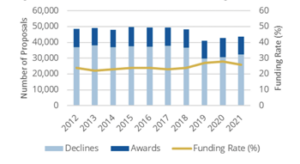
Figure 2: Overall award, decline and funding rate trends. Source: NSF
At the local level, the city of Easton illustrates these political dynamics on a smaller scale, where community demographics and socioeconomic status create specific educational needs. As of 2022, Easton’s population demographics reveal a predominance of White residents, while Black and Hispanic residents represent notable minority groups (Data USA 2022). This diversity is mirrored in the Easton Area School District, where nearly half of the student population identifies as racial or ethnic minorities. Approximately 47.8% of students in this district are economically disadvantaged, and 8.2% are classified as English language learners, highlighting the significant need for tailored educational support (Data USA 2022).
Local politics play a crucial role in shaping public funding and educational policies. In Easton, challenges related to funding disparities and educational inequities are prevalent, especially within the local school district (Kun 2024). Decisions made by city governance and the school district’s board directly impact funding allocations and educational priorities. For instance, the LafKid Connect program, which aims to connect Easton Area Middle School students with college students and faculty recently lost funding (Fowler 2024). This highlights the fragility of outreach programs that rely on political support and funding stability.
Universities can act as hubs for research and innovation in STEM education. Through partnerships with local schools and community organizations, they can implement evidence-based practices that enhance the effectiveness of outreach initiatives (Fowler 2024). By focusing on socio-technical approaches, institutions can teach students how STEM fields manifest in the real-world, such as in sustainability and the social impacts of technology. Lafayette College’s LafKid Connect program plays a key role in addressing educational disparities in Easton. By engaging with local middle school students, the program provides hands-on experiences in STEM disciplines, enriching the educational landscape for both K-12 participants and college students.
For college students, volunteering in outreach programs helps Lafayette students develop essential skills such as communication, leadership, and mentorship. Furthermore, these experiences cultivate a sense of social responsibility and a deeper understanding of the challenges faced by diverse communities. STEM outreach and engineering education programs are situated within a complex political landscape where national, state, and local policies intersect to influence who has access to quality STEM education. While national and state policies provide frameworks and funding, local implementation and partnerships, particularly with universities, determine the success of these initiatives. By understanding and leveraging political support and addressing structural barriers, STEM outreach projects can work to create a more inclusive and diverse STEM workforce, meeting both educational and economic objectives in the process.
As seniors in the Engineering Studies Program at Lafayette College, while we are taught concepts in sociotechnical systems, we are also equipped to understand how technology and engineering have been taught throughout history, including in political contexts. Over four years we learn to see technologies with greater nuance and communicate it to broader audiences. We also learned about the family of STS fields – Engineering Studies, History of Technology, Humanitarian Engineering, Holistic Engineering, etc. For these reasons, we are in a position to explore new ways of engineering education at the K-12 level.