Concept Map Update
Leave a reply
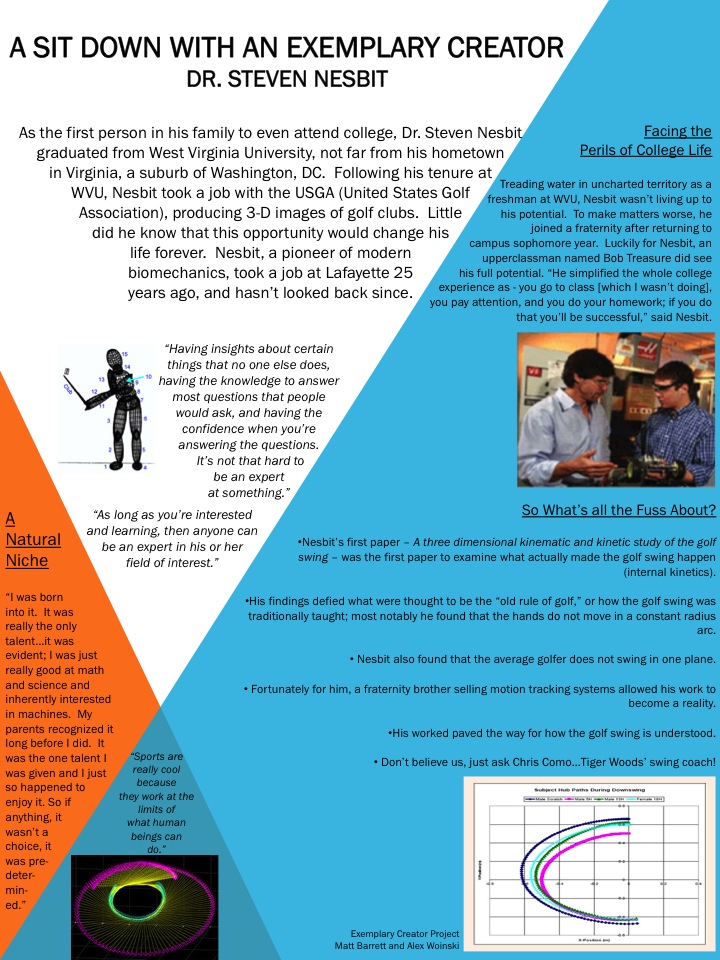
Our exemplary creator is Steven Nesbit, a mechanical engineering professor at Lafayette that specializes in biomechanics.
Matthew Barrett: Where are you from? Where did you go to school?
Steven Nesbit: I’m from Virginia; I grew up just outside Washington, DC. I went to school at West Virginia University. I did all my degrees there. I have a lot of family there so it was nice being close to them. After I graduated from school, I worked in the aerospace industry for a while for a company called Pratt & Whitney, and then I came here [Lafayette], and have been here for about 25 years.
MB: What exactly is your field within the broad scope of engineering?
SB: Biomechanics is even pretty broad; the part I look at involves mostly human movement/motion, and specifically I spend most of my efforts in sports movements.
MB: When did your passion develop? When did you realize you were great at what you do?
SB: I was born into it. It was really the only talent…it was evident; I was just really good at math and science and inherently interested in machines. My parents recognized it long before I did. It was the one talent I was given and I just so happened to enjoy it. So if anything, it wasn’t a choice, it was predetermined.
MB: Did your parents do something related to your craft?
SB: No [my parents were not engineers or in the math/science field]. My parents didn’t go to college. I was the first generation.
MB: Did you have a mentor?
SB: The short answer is no. I was the first one in my family to go to college, so I was really clueless and fumbled around pretty badly my first year. So of course the first thing I did when I came back my sophomore year was join a fraternity, which was like the wrong thing to do. But there’s a guy in my fraternity, his name is Bob Treasure, who for some reason was able to see that I was not fulfilling my full potential. And he sat me down and basically just reamed me out for doing poorly; and he simplified the whole college experience as – you go to class [which I wasn’t doing], you pay attention, and you do your homework. If you do that you’ll be successful. He basically redirected me and after that, everything was no problem.
What was the biggest obstacle you have had to overcome?
SB: If there were any obstacles, they were self-imposed. The whole academic world is wide open in that its totally results oriented; you make your own hours, you pick your own topics, and you study at your own pace. [And] the school and the field don’t care how you do things just that you contribute. If I wasn’t achieving what I wanted to achieve, it was more on me. Lafayette has been good at supporting what I like to do; the USGA (United States Golf Association) supported me for a long time too. The support has always been there.
MB: Do you have any regrets?
SB: No. I would say that the one thing I have done pretty well is that I’ve been able to balance my life. I think that if all I did was work, then that would be a regret, but I had a family, and I spend a significant portion of my free time doing stuff that I love. I hiked all over the country and I’ve ridden my bicycle across the country. So I think that I was able to achieve and maintain a balance throughout [my career], so I don’t ever look back and say, “I wish I’d done that.” If I had to do my career over again, I’m not sure that I would change anything.
MB: What’s least favorite part about what you do? What is your favorite part?
SB: The least favorite part is easy – it’s grading. I hate grading! Teaching can be very satisfying; you help someone improve in an area that they have chosen, you can watch them grow, and you can see them progress from year to year. You see them mature they learn to become self reliant.
MB: What project is considered your best?
SB: I worked for the USGA for a long time and they were very supportive. We did some really great work, but they didn’t allow me to publish it; they want to keep it all “in house.” Once I finally stopped working for them, I went out and basically compiled all the data I had from all the golfers that I had ever analyzed and published a paper. It basically was the first paper about the dynamic analysis of the golf swing. It gets talked about all the time; I still get a lot of attention and opportunities because of that one paper – A three dimensional kinematic and kinetic study of the golf swing. Everything else up until that time, was purely kinematic or motion study; this one was the first to look inside the golfer, at the kinetics to see what made the swing happen. It shot down a lot of what was considered the “old” rules of golf, like you swing in one plane, or your hands go in a constant radius arc. So a lot of things came out of it that was considered against the norm. Professional golf instructors take my work and use it as the basis for their teaching.
MB: What project is your favorite?
SB: They’re all good. If there’s a particular project that you don’t like, it’s of your own doing. I like studying all of the sports. Sports are really cool because they work at the limits of what human beings can do, so you get to find out where those boundaries are.
MB: What qualities do you associate with mastery in general?
SB: Having insights about certain things that no one else does, having the knowledge to answer most questions that people would ask, and having the confidence when your answering the questions. It’s not that hard to be an expert at something. It just comes with experience and study. I don’t think that you have to have a superior intelligence; it just comes with time. As long as you’re interested and learning, than anyone can be an expert in his or her field of interest.
MB: What qualities do you associate with mastery in your field?
SB: Having a physics background, and being able to do a dynamic analysis, is what moved this [field] along. Having a love of sports, interest in human movement, and the willingness to consider other peoples’ views, because it’s a relatively new field.
MB: How do you think you compare against those qualities?
SB: I have those qualities that I would be considered an expert. And if nothing else, I get calls all the time!
What was your breakthrough moment?
SB: The breakthrough happened when I was first asked to work for the USGA. They wanted me to come in and generate computer models of golf club heads…that’s all they wanted me to do. Just because I was new, they wanted me to learn this software package called Adams. I went to this school to learn, and they said that you can use this to model humans. I was also talking to my fraternity brother that sold these systems to record people moving; those two things [Adams and motion tracking] together, with my robotics background, allowed me to model human behavior. With this software and I can model golf swings, which no one had ever done before because the tools weren’t there. But the thing that made it happen was the guy that ran the USGA testing facility. He was so open-minded and was willing to try it. [They were mostly there to analyze and make rules on equipment]. The biomechanics part was a little outside of their comfort zone and a lot of money to do so. I’m not convinced that if another person were running the USGA at the time that they would have done that. So for me that was a big breakthrough. When I analyzed those swings, I just reported what I saw, just the physics I found. Some of the things that I found when I told the guys, they said, “That can’t be true!” I wasn’t bias and I think that was helpful. I left the people with the golf experience to do the interpretation.
MB: Do you play golf?
SB: No I never play.
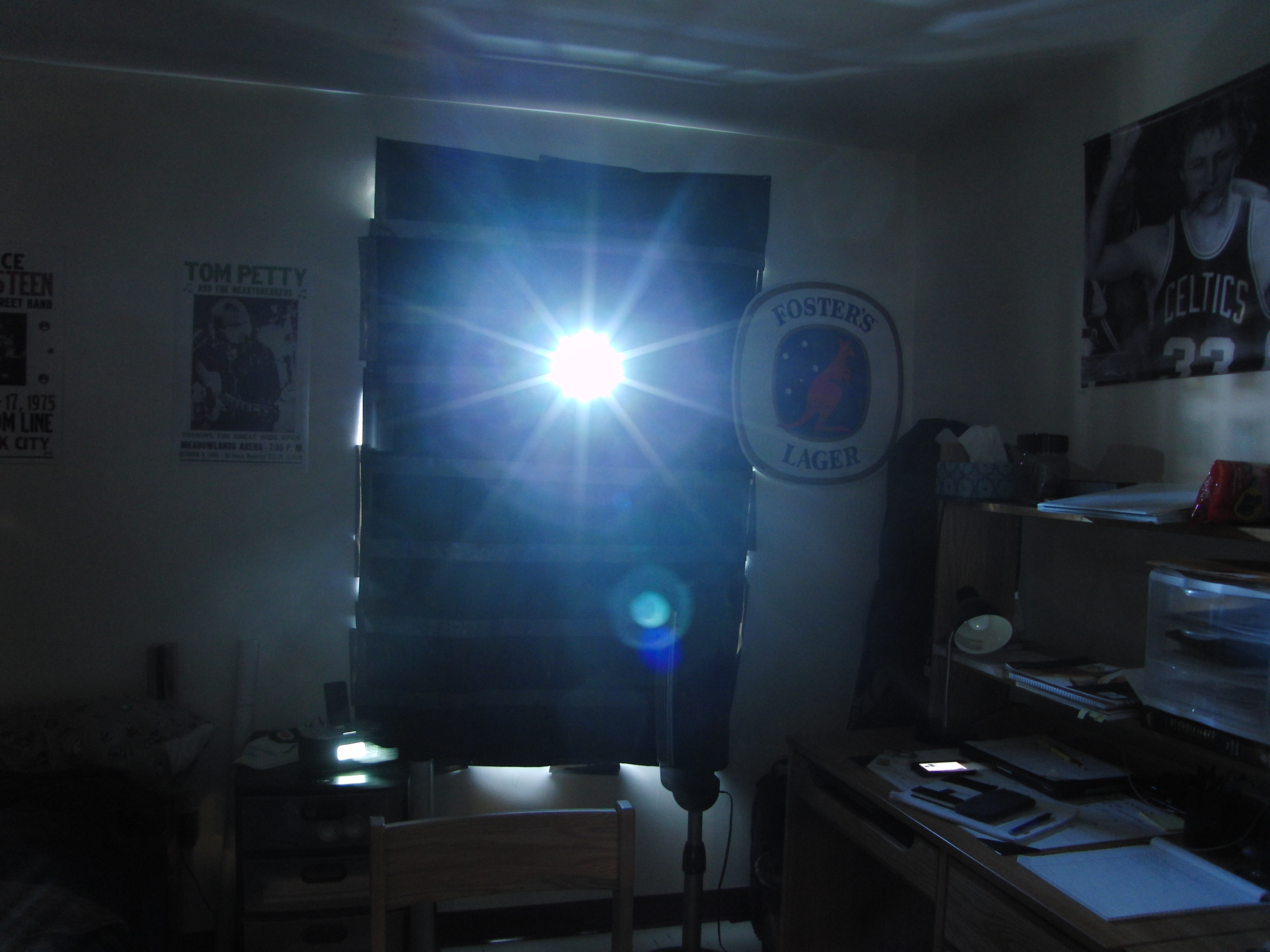
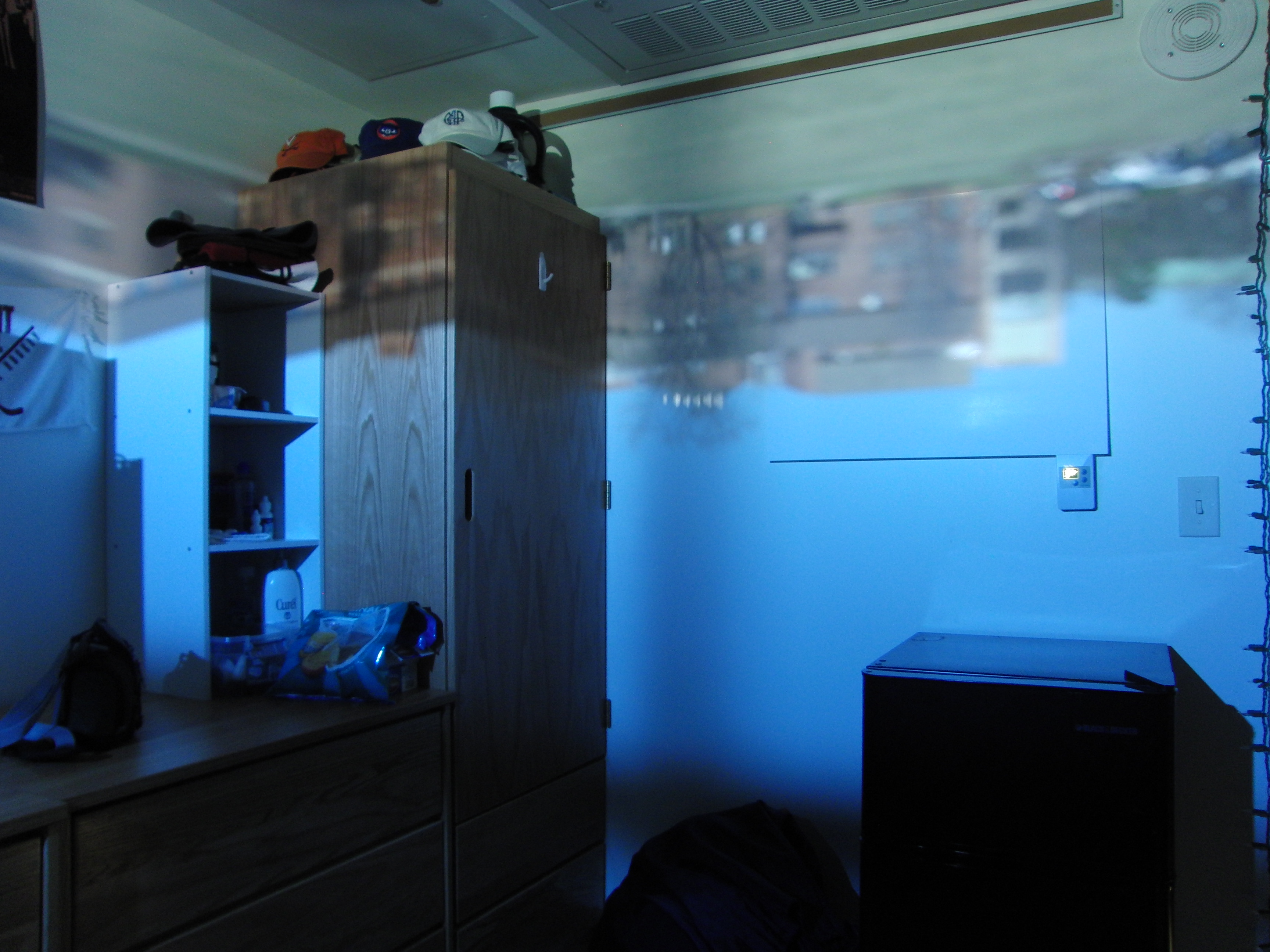
This was probably the best image that I was able to capture. It shows Farber, Ramer, and some of Kunkel across March Field. The shutter was open for 30 seconds. The top image shows the window and setup.
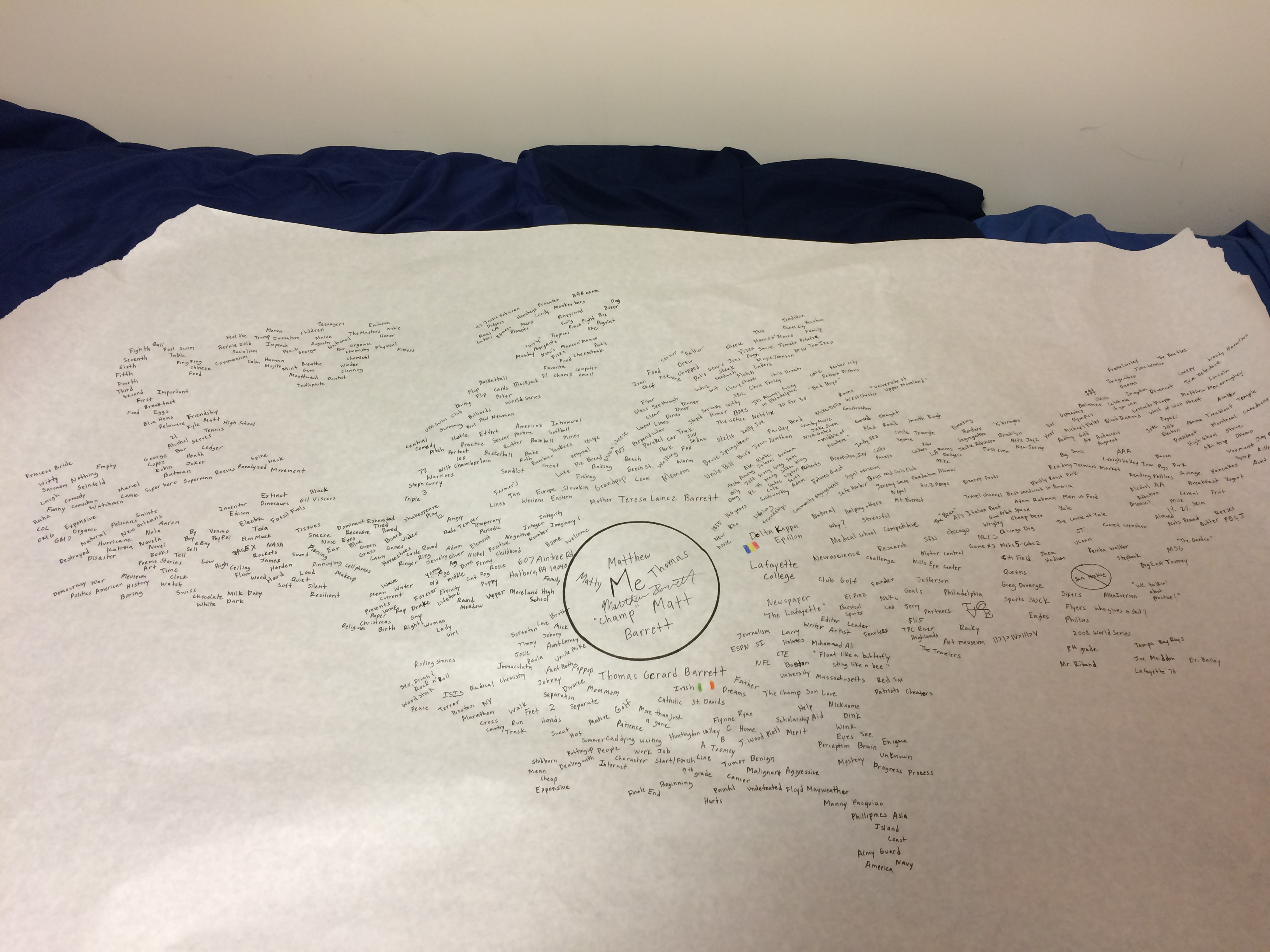
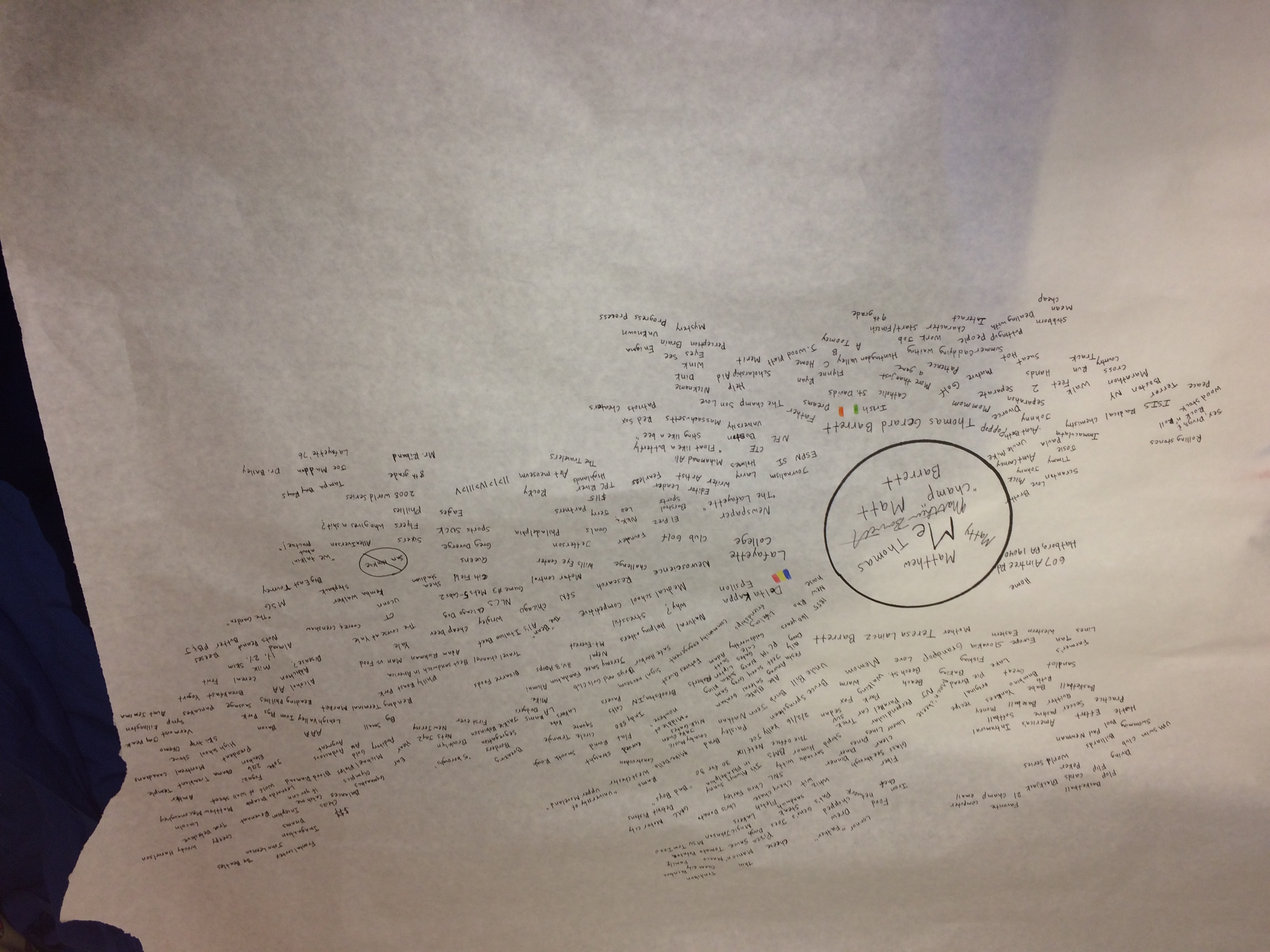
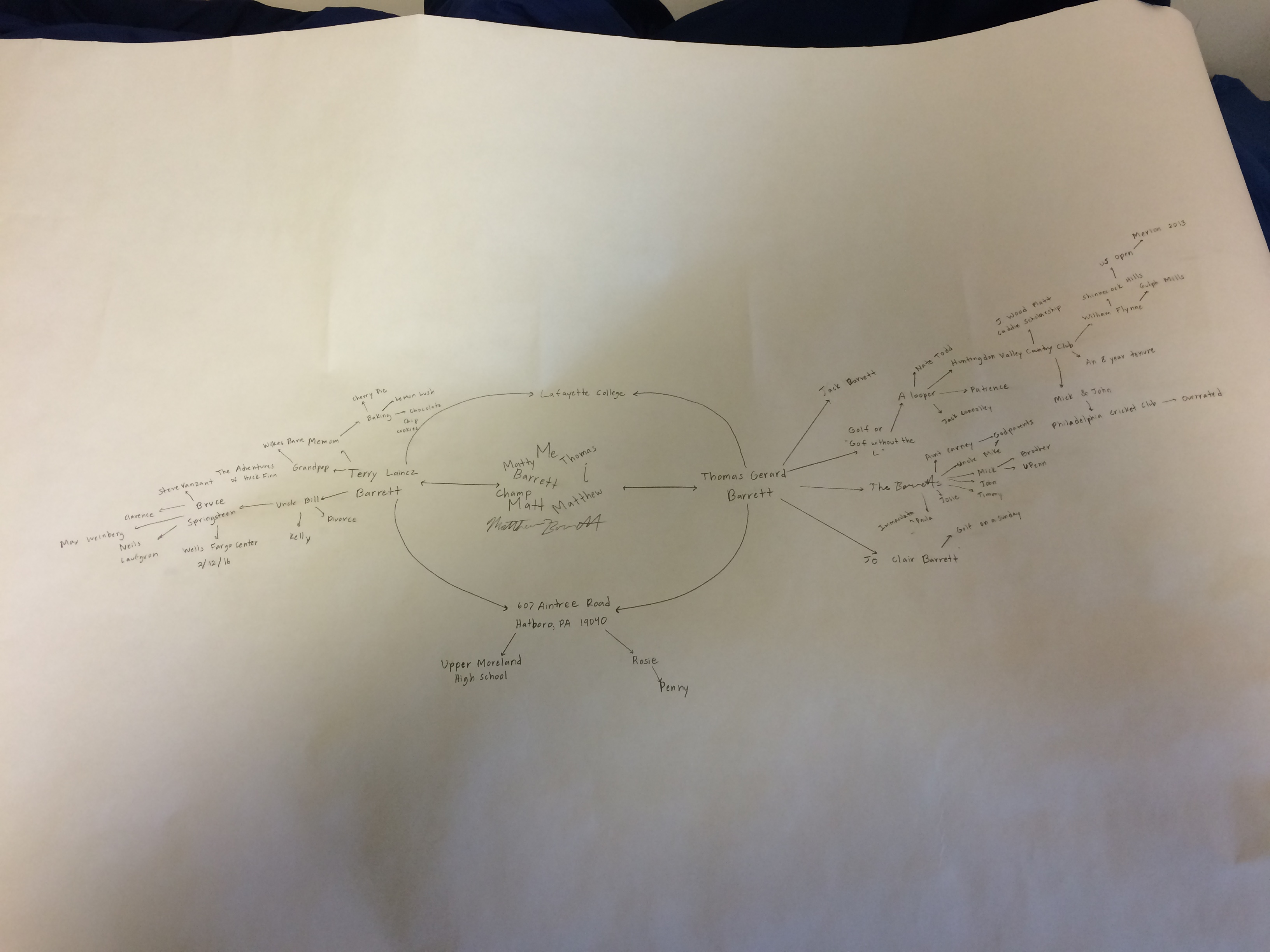
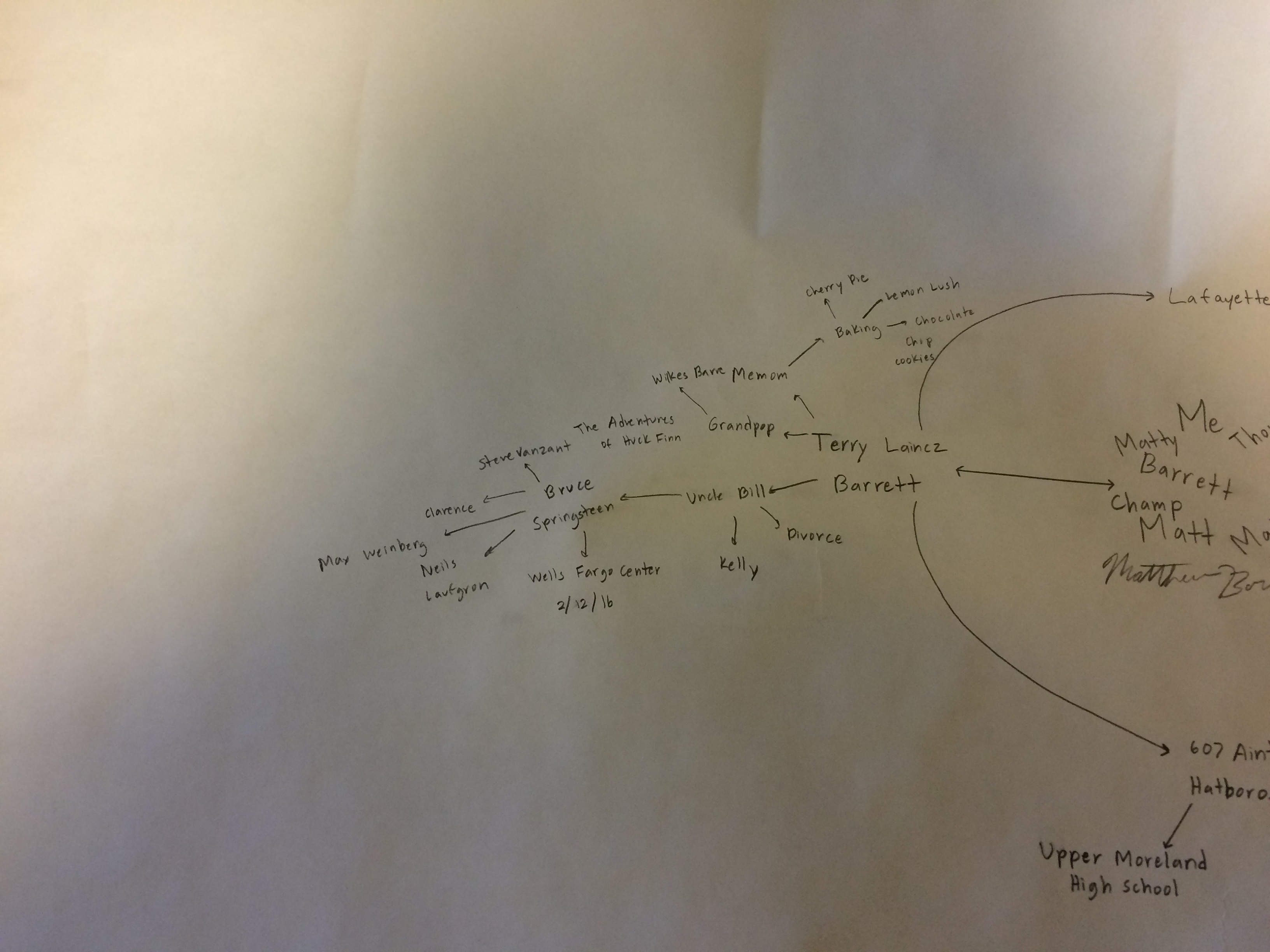
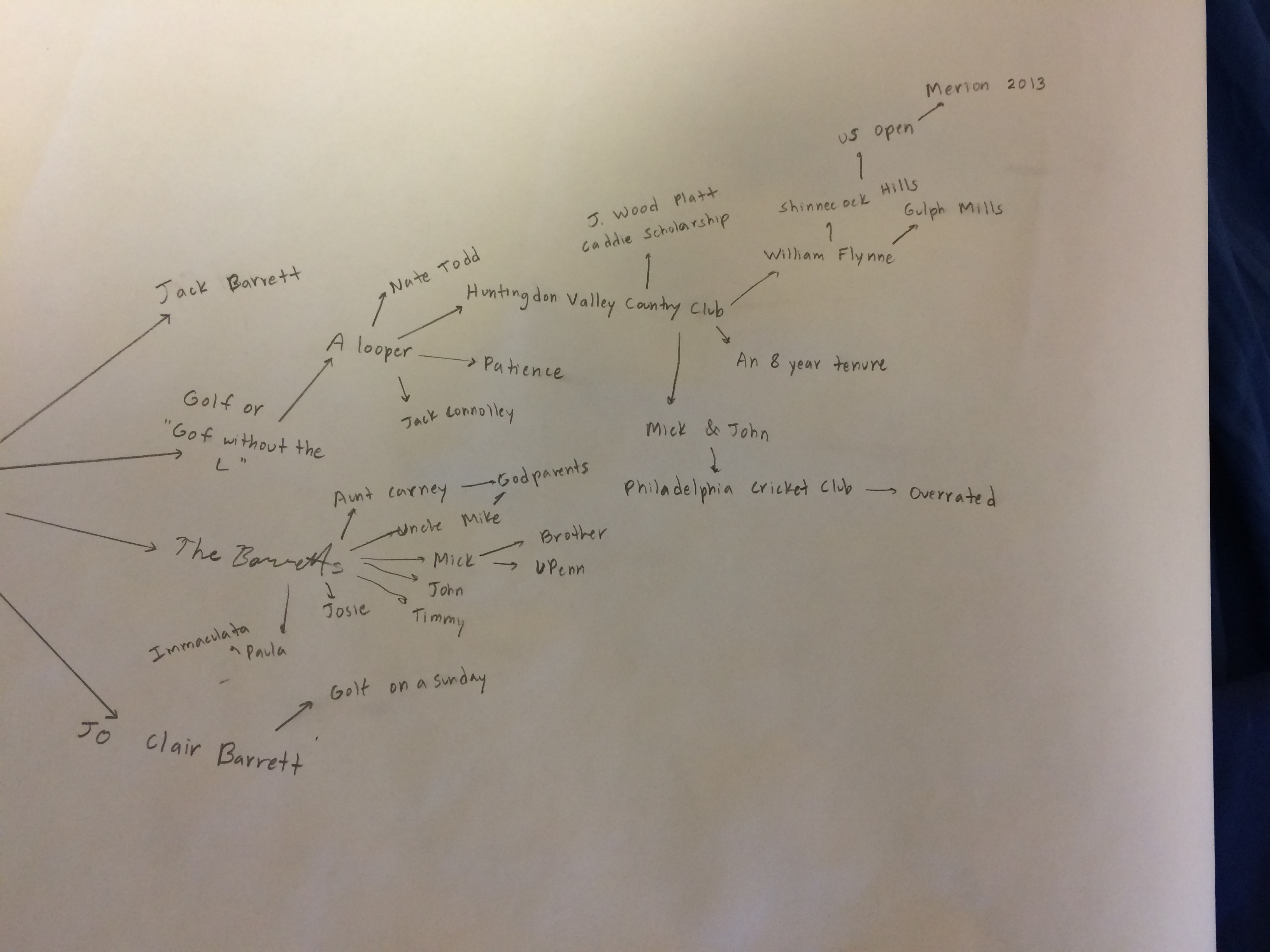
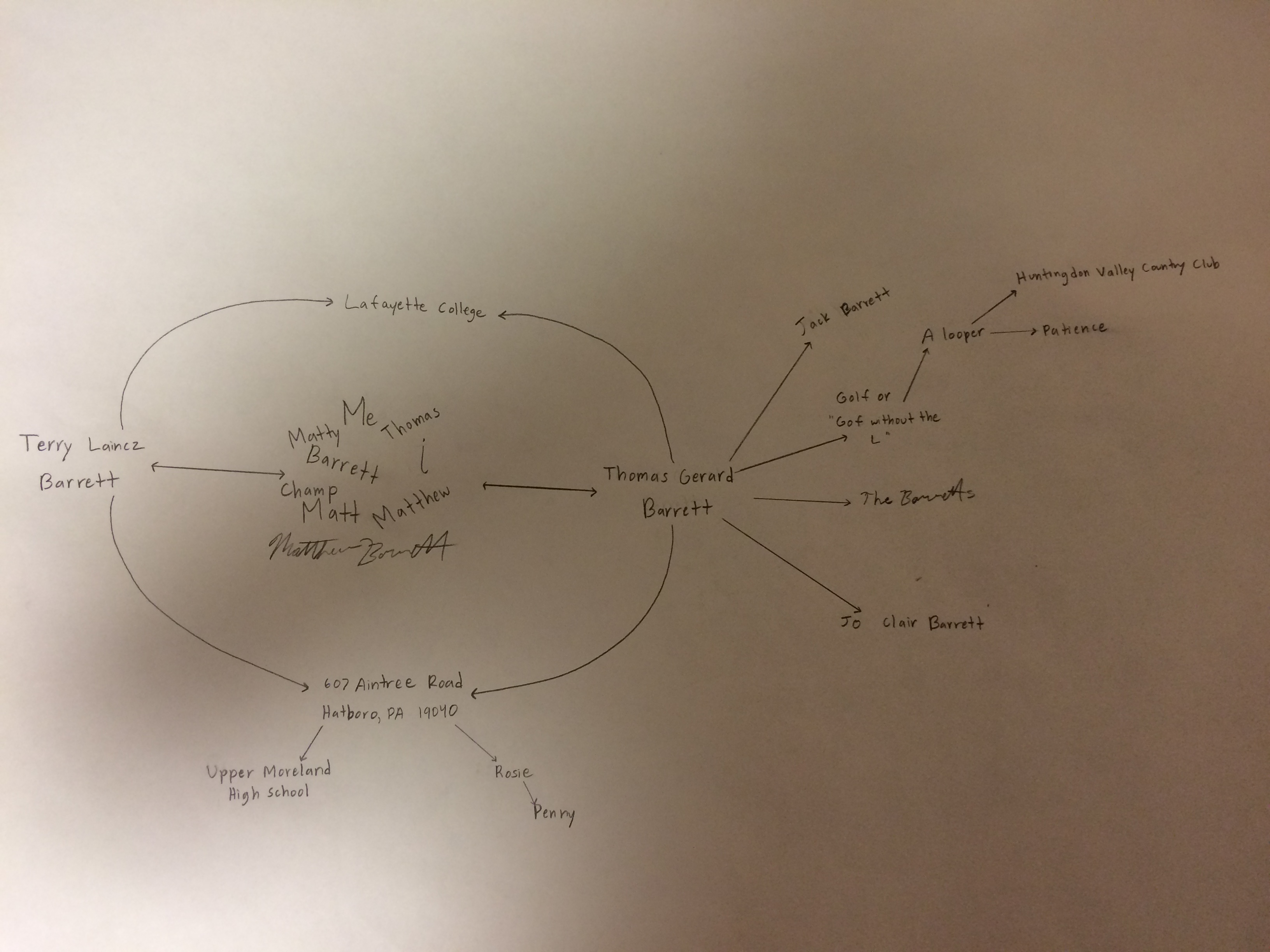 This week I was finally able to put some thoughts to paper. Besides my parents, the next two biggest things in my life are probably my home and Lafayette, each of which have been provided for by my parents; it only seemed right to connect those ideas together with through my mom and dad, which completed the circle of things most important to my life. I continued to expand a little on my dads side and from my home. Also, I removed the piece of loose leaf paper because I feel that I have overcome my “writer’s block.”
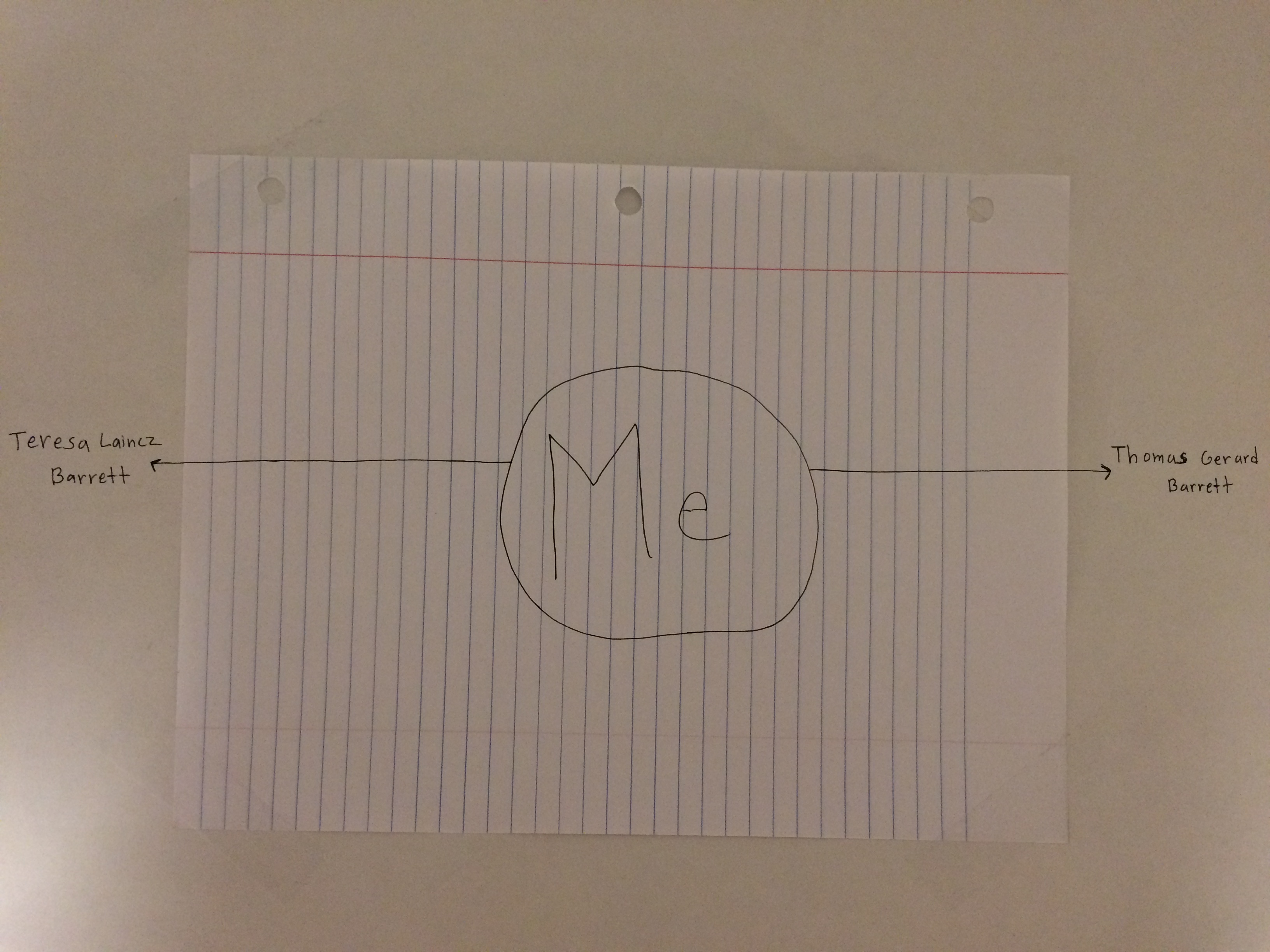
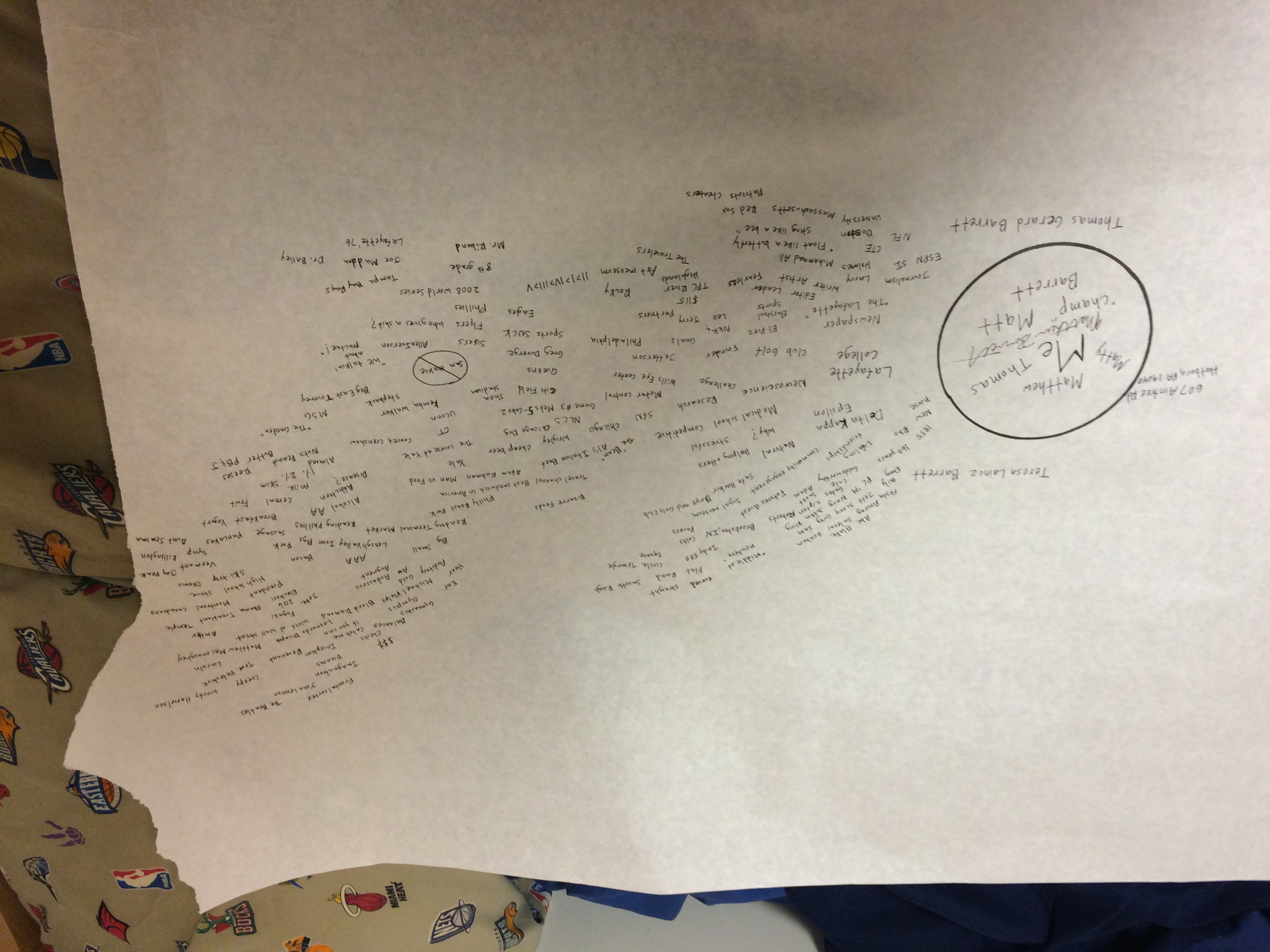
I decided to actually tape the loose leaf onto the map because I think my hesitance to go straight to the canvas says something about me. I figured the best way to begin would be to start with the things that are closest to me – each of my parents.
I think that I am a bit of a neat freak/perfectionist, so I decided to start on a piece of scrap paper before I can transfer all of my thoughts to my poster. I know it looks like I haven’t made much progress, but it’s difficult to think of a few starting points that I can really elaborate and branch off from. I want the points closest to me to be the most significant, so I still have to decide how specific or general I want to be. I don’t want my project map to be a self fulfilling prophecy.