 |
Screening Time: Wednesday, November 4 at 7 PM in the Limburg Theater
|
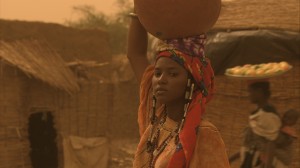
Synopsis: Mocktar, a Nigerian peasant who lost his entire family in a terrible accident, tries to rebuild his life. He goes to Essakane, a dusty gold mine in Northeast Burkina Faso, to look for work and to forget the past that haunts him. He is quickly introduced to the small community of miners and begins working in the dangerous tunnels of the mine. Little by little, Mocktar discovers that the gold rush ended twenty years before, and the inhabitants of this wasteland manage to exist simply from force of habit. In Essakane, the life of the whole population revolves around the irrational expectation of finding gold. Hope makes them surpass the threat of the mines. Among the inhabitants, the beautiful Coumba is still courageously struggling to raise her daughter. She takes care of her alone as her husband died in the mine. As he falls in love with Coumba, he fights not only to survive, but also to provide a better future for her and her child. He puts together enough money to prepare for their departure for France where Coumba’s daughter will get a proper education and a chance of becoming someone.
Review: “Depicting an African hell on Earth where ant-like men burrow deep into the desert and risk their lives to mine gold, ‘Dreams of Dust’ relies on hypnotic widescreen photography to bind viewers to its grim drama. In its unexpected horror and absurdity (…), when a gold nugget is found, the whole team becomes rich. When a tunnel collapses, everyone dies. The asphyxiating sand makes rescue impossible. Salgues’ screenplay is perfectly crafted in the Western tradition, while Crystel Fournier’s striking cinematography connects the film to a broad African vision. Mathieu Vanasse and Jean Massicotte’s music track matches the rest of the film in being extremely refined. The French and Canadian post-prod work is top quality.” Deborah Young, Variety
Ce film est tres magnifique! There was such extreme beauty in Reves de poussiere unlike any typical American movie. There were three things that particularly struck my interest: the incredible vastness, the gorgeous composition of the woven huts, and the graceful use of silence. The vastness of the desert, the mines, and even of the characters’ pasts and dreams for the future was conveyed through the steady, strong cinematography of the film. Coupled with the powerful use of silence in many parts of the film, many Americans would pass this film as “boring” while it really stands apart as a very successful use of adding the viewers own thoughts to the film. The director allows these great sort of pauses for the audience to figure out what the characters might be thinking, or feeling and to apply our own reactions to the situation into the very film itself. The shots of the woven sticks of the huts particularly caught my eye as an artist because there was such subtlety in tones and textures that in the golden light just popped off the screen in an incredibly beautiful fashion. The theme of the movie, the subtle humor, and the obvious generosity even through great hardship of the characters all also added to the beauty of Dreams to Dust.